
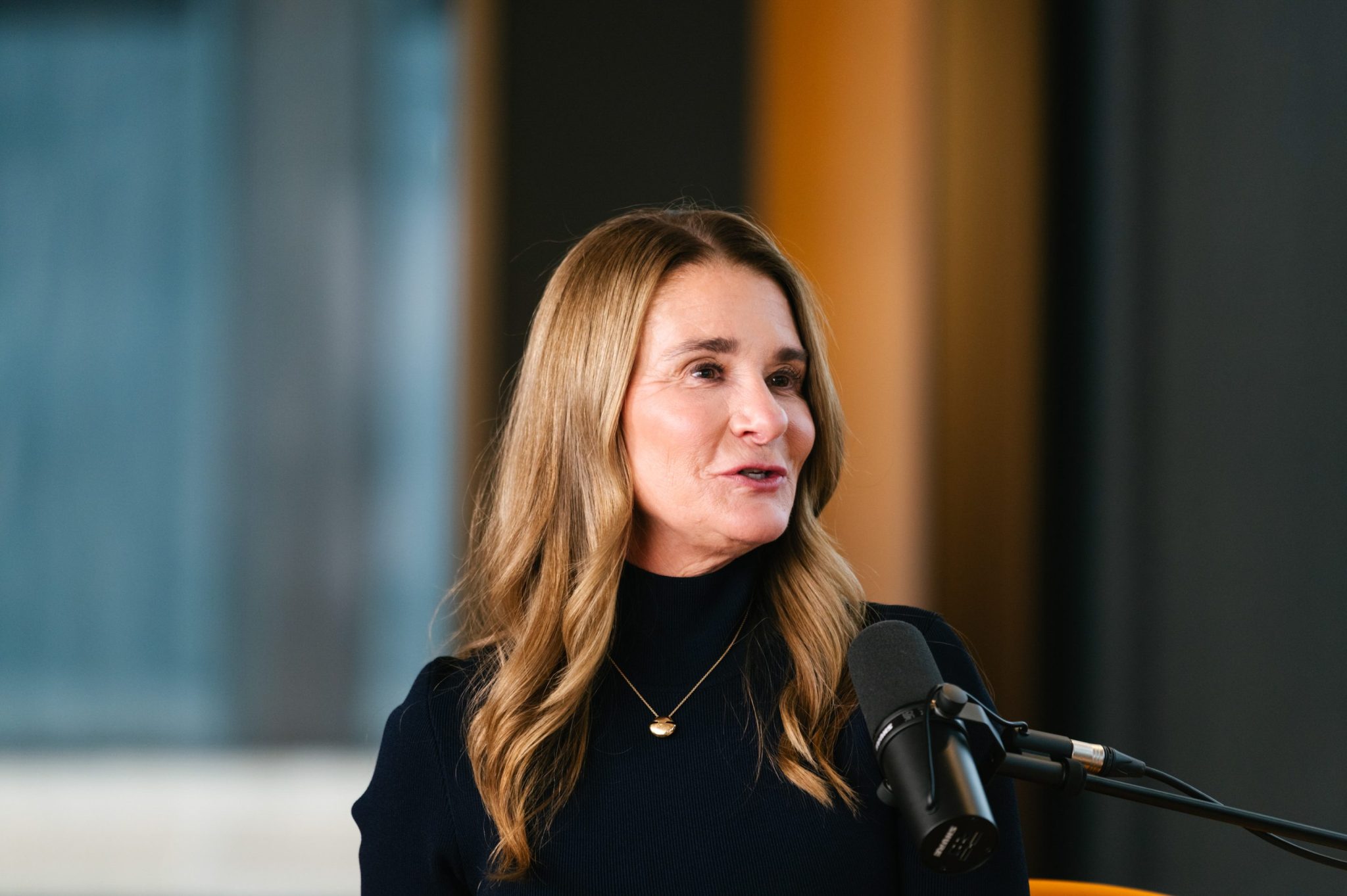
Melinda French Gates has shared her secret formula for handling conflict at work. She puts it off.
“If I’m unhappy with work you have done, you will hear from me within 48 hours,” French Gates told Bloomberg Business‘s Leaders with Francine Lacqua podcast this week. “I’m not going to tell you right away, because I need time to think it through.”
“If I’m angry about something [I do this] to calm down,” she added. “That’s on me.”
This practice, she explained, is less about withholding criticism and more about delivering it with honesty, integrity, and grace. The flip side of the 48-hour clock is just as deliberate. If the window closes without any feedback, that means employees are in the clear.
“If they pass the 48-hour mark, they can be confident that the job they did was a good job,” she said. “You’re not going to get to your performance review and have a surprise.”
This is a practice the billionaire philanthropist has been honing for decades. She cochaired the Bill & Melinda Gates Foundation, the world’s largest private charitable organization, from 2000 until she stepped down in 2024, about three years after the couple’s divorce.
Today, French Gates runs her own organization, Pivotal Ventures, an investment and incubation company she founded in 2015 to advance opportunities for women and families in the U.S. As part of her divorce settlement from the Microsoft founder, French Gates received $12.5 billion to direct toward philanthropic work through Pivotal. She committed an additional $1 billion each year through 2026 to advance women’s power globally.
Melinda French Gates’ approach to leadership and how it compares to other executives
Bloomberg’s Lacqua framed French Gates’ approach to feedback as her “leadership superpower,” one that requires emotional discipline and candor.
“Being clear is kind,” French Gates responded, “because I’m giving them feedback so they can actually grow and become better.”
French Gates also described her 48-hour feedback mantra as maintaining personal integrity while keeping the other person’s dignity intact: “gracious, thoughtful, before you go into it.”
Her philosophy conflicts with some of the more aggressive feedback cultures from other executives. Ray Dalio, for example, built his firm’s culture around what he calls “radical transparency,” a system in which employees at every level are expected to deliver unfiltered, real-time criticism, and nearly every meeting is recorded for post-mortem analysis.
“If you start to realize, intellectually, that being really truthful with each other is something that is to be treasured,” Dalio told Business Insider. “It’ll build trust.”
“There’s a lot of trust that’s going on,” added Dalio, who founded Bridgewater Associates, the world’s largest hedge fund firm. He even recalled to Business Insider a time in which a junior staffer sent him an email grading his performance in a meeting as a “D-” for being disorganized.
So while Dalio prefers immediacy and unvarnished feedback, French Gates opts for more reflection time and a respectful tone.
Microsoft CEO Satya Nadella takes a slightly different approach. When he took the helm of Microsoft, he pushed to transform a “know-it-all” culture into a “learn-it-all” culture—one grounded in humility, curiosity, and psychological safety. It’s a mantra inspired by American psychologist Carol Dweck, who is best known for her research on motivation and mindset.
“If you take two people, one of them is a learn-it-all and the other one is a know-it-all, the learn-it-all will always trump the know-it-all in the long run, even if they start with less innate capability,” Nadella told Bloomberg in a 2016 interview.
Still, French Gates is clear she doesn’t shy away from difficult conversations.
“I don’t mind conflict,” she told Bloomberg. “I learned to do it in a way for me that maintained my integrity.”
This story was originally featured on Fortune.com