
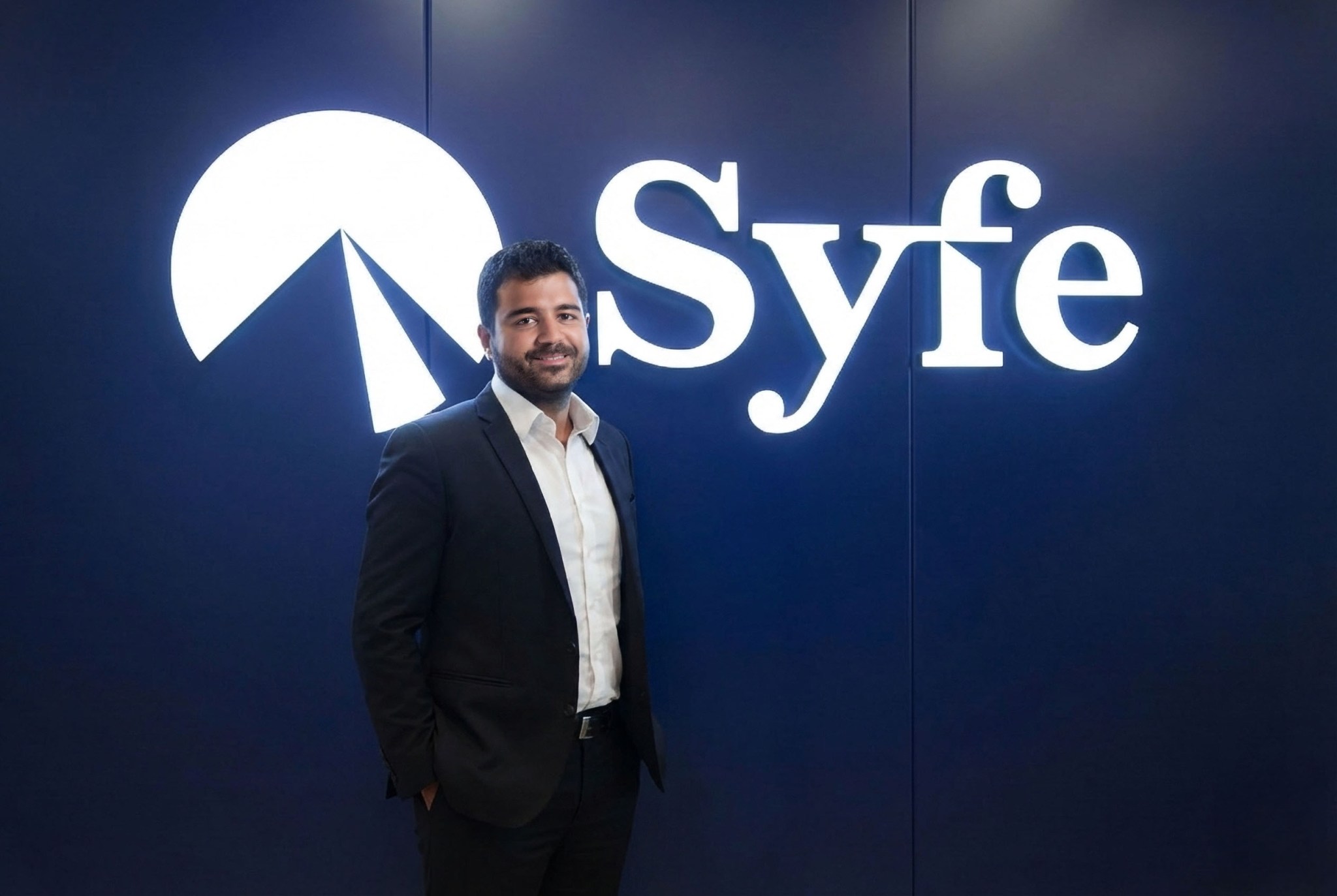
Growing up in India, Dhruv Arora’s mother gave him one key piece of financial advice: Put his money in the bank.
But Arora, now the founder of Singapore-based fintech platform Syfe, quickly realized that following his mother’s advice meant his money “did absolutely nothing.”
“We have quite a heavy culture of saving,” Arora says, citing Asia’s often unstable economic and policy history. But inflation and low interest rates end up eroding the value of household savings. “Over time, the $100 you put in the bank doesn’t become $101, but effectively $98” due to the effects of inflation.
Asian households sometimes keep as much as 50% of their net worth in cash, rather than in investments or assets. In contrast, in developed markets like the U.S. and Europe, that figure is closer to 15%.
But that conservative attitude in Asia is starting to change. Asians are getting wealthier, pushing them to explore different investment options. Strong stock market performance is also driving a new wave of retail investors across the Asia-Pacific.
“Asian households are slowly dipping their toes into stock markets,” HSBC economists wrote in a Jan. 9 report, though noted that “overall equity investment remains quite low.” The bank predicts that a steady shift from low-yield cash to higher-yield investments will mean “more money will continue to rotate into equity markets over the next few years,” reducing a reliance on foreign investors.
A slew of fintech apps have emerged in recent years to tap a growing interest in investing and wealth management among Asian users. These alternative finance platforms, such as Syfe, Stashaway and Endowus, often offer a range of investment options, ranging from cash management to managed portfolios and options trading. The challenge, Arora says, is how to “bridge the gap between holding money and growing wealth,” and “give more people the confidence to put their savings to work.”
Arora began his career as an investment banker for UBS in Hong Kong in 2008, soon after the Global Financial Crisis. Despite Asia’s relatively quick recovery, Arora noticed that the region’s professionals were building wealth yet didn’t know how to manage it. “These were smart people like doctors, lawyers and consultants, who were doing well professionally, but just did not know what to do with their money,” he says.
He launched Syfe in 2019, just a few months before another global crisis: The COVID-19 pandemic. Yet the pandemic ended up being an opportunity for fintech platforms like Syfe. “It acted as a catalyst for a shift in investor behavior,” Arora explained, as people suddenly had the time to engage with financial markets.
In the U.S., for example, people stuck at home began to get involved in stock trading through platforms like Robinhood. Fueled by social media, these retail investors began to heavily trade in so-called meme stocks like Gamestop and AMC.
Syfe has since expanded from its home market of Singapore to new Asia-Pacific economies like Australia and Hong Kong. The platform continues to grow both its userbase and company revenue, and the company claimed it reached profitability in Q4 2025. It’s now a “self-sustaining organization,” Arora says.
Syfe closed an $80 million Series C funding round last year, and is backed by major investors like NYC-based Valar Ventures and UK-based investment firm Unbound.
The platform’s users generated $2 billion worth of returns while saving $80 million in fees last year, according to the company.
Currently, Arora wants to deepen Syfe’s presence in its existing markets. Last year, the platform began to roll out bespoke offerings for its users, like private credit for accredited investors looking to diversify their portfolios on Syfe. Syfe will launch options trading in 2026.
Arora notes that many of Syfe’s users, over time, have grown more comfortable with taking larger investment risks, moving from putting their money in Syfe-managed portfolios, to more actively trading on brokerages and income portfolios.
Yet he eventually wants to bring Syfe to new markets in North Asia and the Middle East, which boast sizable populations of what Arora terms the “mass affluent,” a population with significant investable assets and higher-than-average incomes, though still not in the high-net-worth category.
“This demographic has historically been ‘stuck in the middle’: too large for basic retail banking, yet often underserved by traditional private banks,” he explains.
This story was originally featured on Fortune.com