
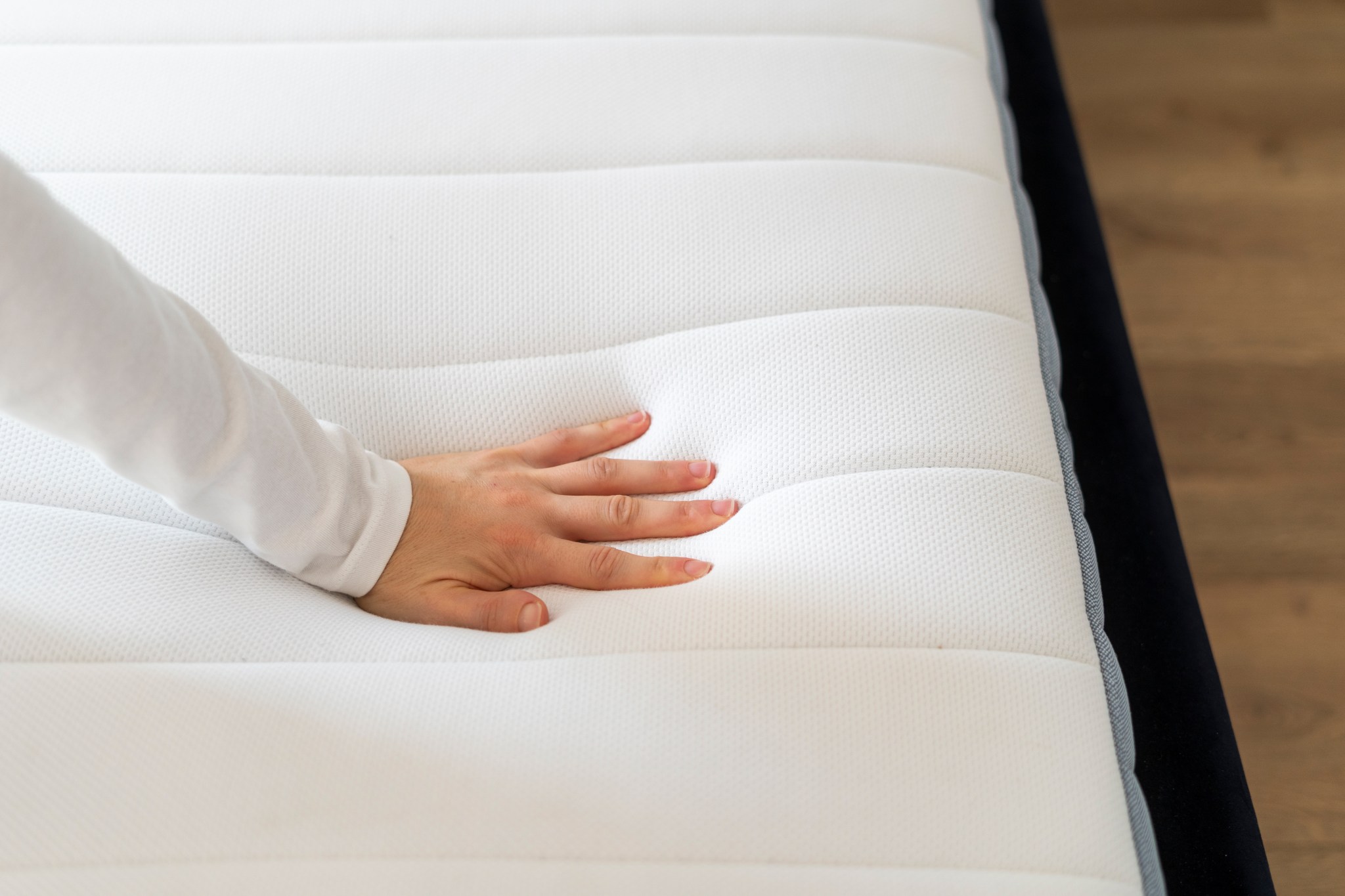
It’s one of the first questions you’ll need to consider when shopping for a new bed: how soft or firm do you want it to be? While your answer mostly depends on personal preference, there is some research-backed advice you should consider when it comes to finding the right firmness level, especially if you experience back pain or you find yourself waking up stiff most mornings.
No two mattress companies have the exact same definition of “firm,” and everyone’s experience of what’s comfortable is different. That’s why we have a special methodology for rating the firmness of mattresses when we test them, taking into account the company’s scale and how the bed feels on different body types.
In this article, we outline what you’ll typically see in one of our mattress reviews, and what you’ll find when shopping around for a new bed. We also looked to research on how mattress firmness affects back pain, consulted with a sleep medicine expert for advice on who needs a firmer mattress, and included more factors to consider before you spend your hard-earned money on a new bed.
What are mattress firmness levels?
In the US, there is no industry-standard, 100% objective scale for mattress firmness. How firm or soft something feels ultimately depends on factors like your body type and sleeping position. Brands will also sometimes use words like “plush” to describe softness, for example, or “luxury firm” to describe a mattress that’s somewhere between soft and firm.
Below is the mattress firmness guide we use when we test mattresses, ranging from 1 (soft) to 10 (extra firm).
Soft (3 to 4 out of 10)
The softest mattresses on the mattress-firmness scale can also be called “plush” and may have a cradled, sinking feeling. A quality soft mattress will still be supportive, but not as supportive as a mattress on the firmer side of the mattress firmness scale.
Medium (5 to 6 out of 10)
A medium mattress is a nice middle ground between a soft mattress and firm mattress. It’s a great place to start testing beds in a mattress store if you’re experimenting with which firmness level is best for you.
Medium-firm (6.5 out of 10)
A medium-firm mattress is similar to a mattress with medium firmness, only it’s slightly more supportive. Research has shown that mattresses labeled as being medium-firm may be associated with less lower back pain, though one mattress brand’s “medium” may be the same as “medium-firm,” or even another company’s “firm.” Again, mattress firmness is subjective and depends on how it works for your body.
Firm (7 to 8 out of 10)
Some people need a firmer mattress to support their body and reduce back pain, as a firm mattress won’t leave you sinking into it. Others just prefer the feel of a firmer mattress. You can expect mattress companies to clearly label their firm mattresses, though whether it has a medium-firm or firm-firm feel to you will depend on your body and sleeping position.
Extra firm (9 to 10 out of 10)
If in a mattress review we rate a bed as “extra firm,” you can bet it’s a fit for people looking for the hardest-feeling mattress out there.
How do you know what mattress firmness you need?
“There’s so much personal preference and variation here,” said Jennifer Martin, PhD, spokesperson for the American Academy of Sleep Medicine and professor at Herbert Wertheim College of Medicine at Florida International University. Side sleepers may prefer something with a softer feel to reduce pressure, she said, but people with back pain “seem to do better” on a firmer mattress.
If it’s possible, it’s a good idea to go to a mattress store and test out the beds you’re interested in buying to make sure you like it, according to Martin. This way, you can see for yourself how a “firm” mattress compares to a softer one.
“I think it’s helpful to go test drive some mattresses,” she said.
Just be sure not to be pressured into buying a mattress before you’re sure–you can always test mattresses in person and buy them online or at a later date.
People with back pain
Lower back pain can disrupt your sleep, which makes finding the right mattress even more important for those experiencing chronic pain. According to a large systematic review published in 2021, mattresses labeled medium-firm by a European standardization committee led to better sleep quality and comfort among people with lower back pain.
Again, there’s no standard way to shop for “medium-firm,” though mattresses in this range may offer the right level of spinal support and comfort to help people with back pain sleep soundly. However a mattress is technically labeled by a mattress company (“medium,” “medium-firm” or “firm”), it may be best to avoid mattresses that are extra soft.
“Too much give in a mattress seems to make back problems worse,” Martin said. That’s because sinking into a mattress too deeply can put strain on your body.
Back sleepers
The back-sleeping position is considered a good one when it comes to keeping your spine aligned and neutral at night, and you’ll want your mattress firmness level to support that. If you don’t know where to start, consider a medium or medium-firm mattress, as research has shown people tend to have less pain from sleeping on these mattresses compared to other firmness levels.
Depending on your body or how deeply you feel you’re sinking into the mattress (or if it’s not cradling you at all), you may want a mattress that’s a little softer or firmer.
Stomach sleepers
Stomach sleeping, while a go-to position for many people, may lead to more neck and back compared to other sleeping positions because of the strain put on the neck and spine when you turn your head to breathe.
In order to keep your spine as aligned as possible, you may want to consider a firmer mattress that doesn’t let your hips sink in too deeply, which will potentially arch to your back and cause strain.
Side sleepers
In general, side sleepers may be able to get away with mattresses on the softer end of the mattress firmness scale, since their priorities are pressure relief on the hips and shoulders, and they don’t need the extra support to outdo the spinal strain and potential back and neck pain stomach sleeping can cause. However, heavyweight side sleepers may prefer a bit more firmness if they feel they’re sinking in too much on a soft or medium mattress.
How to choose your mattress and firmness level
When choosing the right mattress firmness for your needs, these are the most important factors to consider:
Chronic pain
If you have back pain, you need a mattress that offers adequate support while allowing you to sleep comfortably. Research has shown that mattresses on the medium-firm side tend to lead to better outcomes.
Body size
Lightweight sleepers may think a mattress feels firmer than a heavyweight sleeper, for example, because of the different amounts of pressure on the mattress. A person with a larger body may also be more uncomfortable on a softer mattress than a person in a smaller body for similar reasons.
Sleeping position
A person who sleeps on their stomach may need more firmness for support than a person who usually sleeps on their side because the spine is aligned differently based on sleeping position.
Whether you sleep with another person
When two people’s priorities are competing for the optimal mattress-firmness level, consider a mattress with customizable firmness or a “split-king” mattress that is actually two separate beds, but pushed together.
Consider testing a medium or medium-firm mattress
It’s worth considering that, in addition to the large review that found people with lower back pain benefited most from medium-firm mattresses, a smaller study that looked at sleep quality in people with an average body mass index (BMI) also found that medium-firm mattresses led to better sleep outcomes.
If you don’t know where to start your mattress-firmness journey, testing mattresses in the medium or medium-firm range may be the best bet.
FAQs
What is the best mattress firmness level?
There is no single “best” mattress firmness level. Body weight, sleeping position, and health concerns are all important factors that influence whether someone will sleep better on a firmer or softer mattress.
What mattress firmness do side sleepers need?
Side sleepers should look for a mattress firmness that hits the sweet spot: supportive enough to keep their spine aligned and their body as neutral as possible, but soft enough to offer pressure relief on their shoulders and hips. A medium or medium-firm mattress may be suitable for many side sleepers.
What mattress firmness do people with back pain need?
Research has found that people with back pain, particularly lower back pain, tend to sleep more comfortably on mattresses that hover around the medium-firm level, as opposed to beds that are the firmest of firm. Your bed should be supportive to your spine and body, but not so firm that you’re uncomfortable.
How can couples find the best mattress firmness?
“When you share your bed with a spouse or a partner, this can be a really tense decision,” Martin said. In addition to having different body weights that can influence the comfort of a mattress, couples may also prefer different sleeping positions and have different health concerns that can tip the scale when finding that Goldilocks level of firmness.
But there are ways around the issue. Martin says that couples should first look at whether their mattress is the right size and allows enough room for two people. Then, she suggests looking at the more customizable mattresses out there designed with flexibility in mind. For example, some companies make beds that offer customizable or split firmness levels, accounting for the different preferences of two people.
You can also look at how adding or removing pillows can get you to sleep more comfortably with your partner, or consider sleeping in separate beds.
“There are some really creative compromises I’ve seen,” Martin said.
This story was originally featured on Fortune.com