
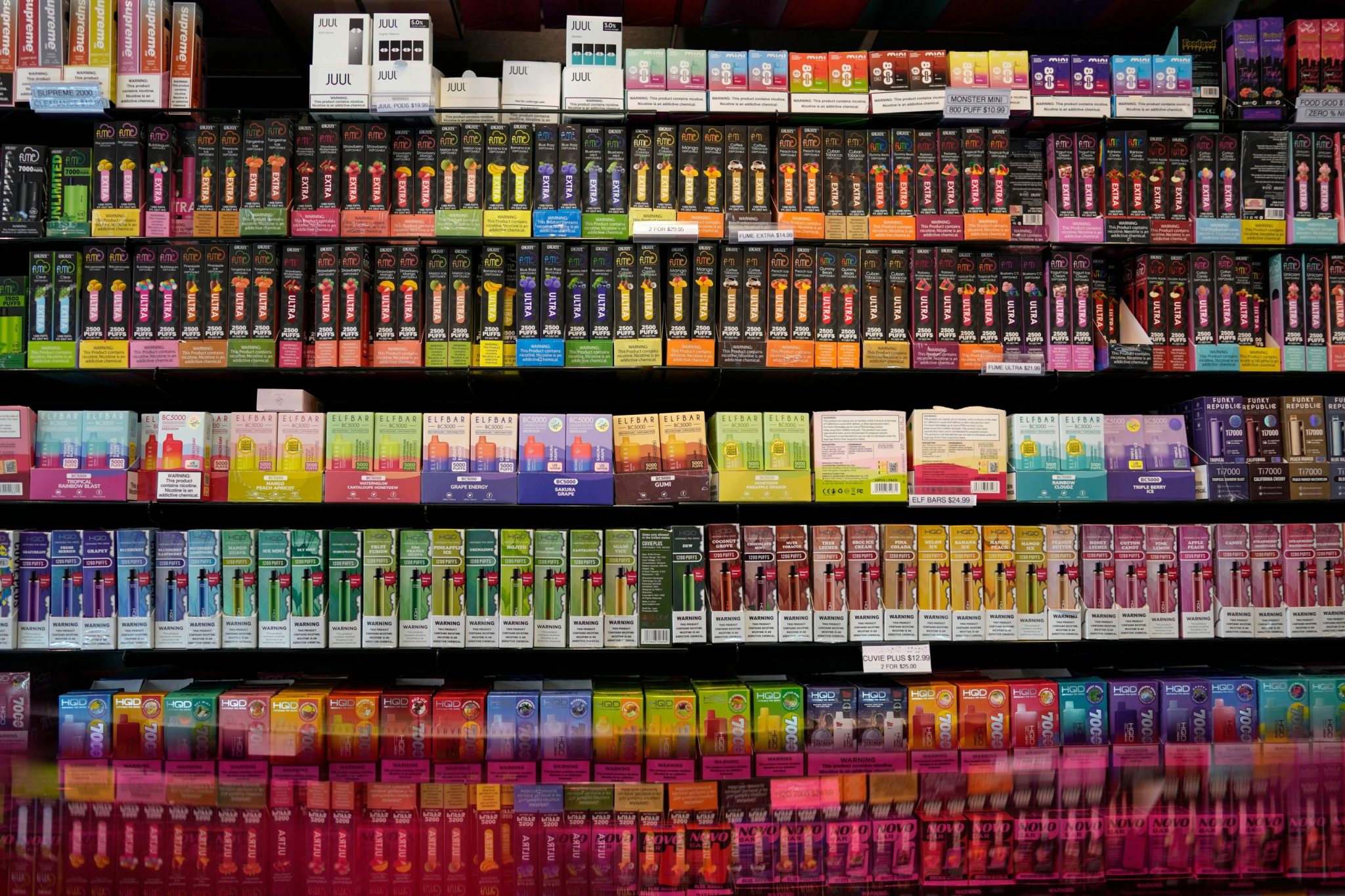
Fruit-flavored e-cigarettes recently authorized by the Food and Drug Administration were not significantly better at helping smokers quit than tobacco-flavored e-cigarettes, according to a new memo that’s likely to stir more questions about the agency’s decision.
The FDA last month gave its first OK to fruit-flavored vapes — essentially endorsing them as a less-harmful alternative to traditional cigarettes. The decision came despite the agency’s longstanding position that such flavors appeal to children and must show extra health benefits to warrant approval for adults.
Health groups and Washington lawmakers quickly condemned the decision and have called for an explanation.
A six-page FDA memo released this week provides more details about the agency’s rationale. In it, FDA regulators appear to sidestep previous statements about the risks of sweet vaping flavors while acknowledging shortcomings in the data submitted by vape manufacturer Glas Inc.
To meet federal standards, companies must show that their products benefit public health. In practice, that means demonstrating that their vapes help adult smokers switch or quit cigarettes, while not attracting underage use by teens.
Smokers who tried Glas vapes were much more likely to completely switch from cigarettes over the course of a three-month study, according to the memo.
But the data did not show “statistically significant differences” between adults using the company’s mango and blueberry flavors and those using a tobacco-flavored e-cigarette.
That means the new vapes failed to meet the same bar as a handful of other flavored products previously sanctioned by the FDA, including menthol-flavored vapes from Juul and NJOY. Those companies showed that adults who used menthol were significantly more likely to cut down or quit cigarettes compared with those vaping tobacco flavors.
Elsewhere, FDA regulators explained that the Glas flavored vapes “did not have to demonstrate added adult benefit,” because young people were unlikely to use them. Glas requires users to unlock each e-cigarette with an age-verifying cellphone app.
The agency’s authorization also runs counter to recent FDA guidelines advising companies that fruit and dessert flavors would have to meet “a high evidentiary burden” for adult use, given their risks to children. Tobacco-flavored products are not popular with teens and generally face lower regulatory hurdles at the FDA.
The FDA document is also unusual in its brevity.
Previous FDA memos on new vaping products typically run dozens of pages. For example, last year’s document authorizing Juul’s menthol e-cigarettes was more than 90 pages and included detailed scientific data from research involving 50,000 people.
The short memo on Glas does not include key details, such as how many smokers the firm studied.
Previously, the FDA almost always posted such memos immediately after announcing an authorization. The document on Glas appeared on the agency’s website more than a month after regulators OK’d the products.
The agency has faced questions from members of Congress about the decision. Last month, 10 Democratic senators sent a letter to the agency requesting more information about the authorization, calling it a “shortsighted and reckless decision.”
The application from Glas, which also included menthol and tobacco-flavored vapes, followed a winding path to authorization. The small, Los Angeles-based company submitted a marketing request to the FDA in 2021.
In February, FDA scientists authorized several of the flavors. But that decision was blocked by a senior official reporting to then-FDA Commissioner Marty Makary, according to internal memos later released by the agency.
The mango- and blueberry-flavored products were finally OK’d during Makary’s last full week leading the agency. He resigned the post after months of criticisms from industry stakeholders, including tobacco companies that have lobbied President Donald Trump’s Republican White House for looser regulations on vaping flavors.
A spokesperson for the company could not immediately provide comment when reached Thursday morning.
___
The Associated Press Health and Science Department receives support from the Howard Hughes Medical Institute’s Department of Science Education and the Robert Wood Johnson Foundation. The AP is solely responsible for all content.
This story was originally featured on Fortune.com