
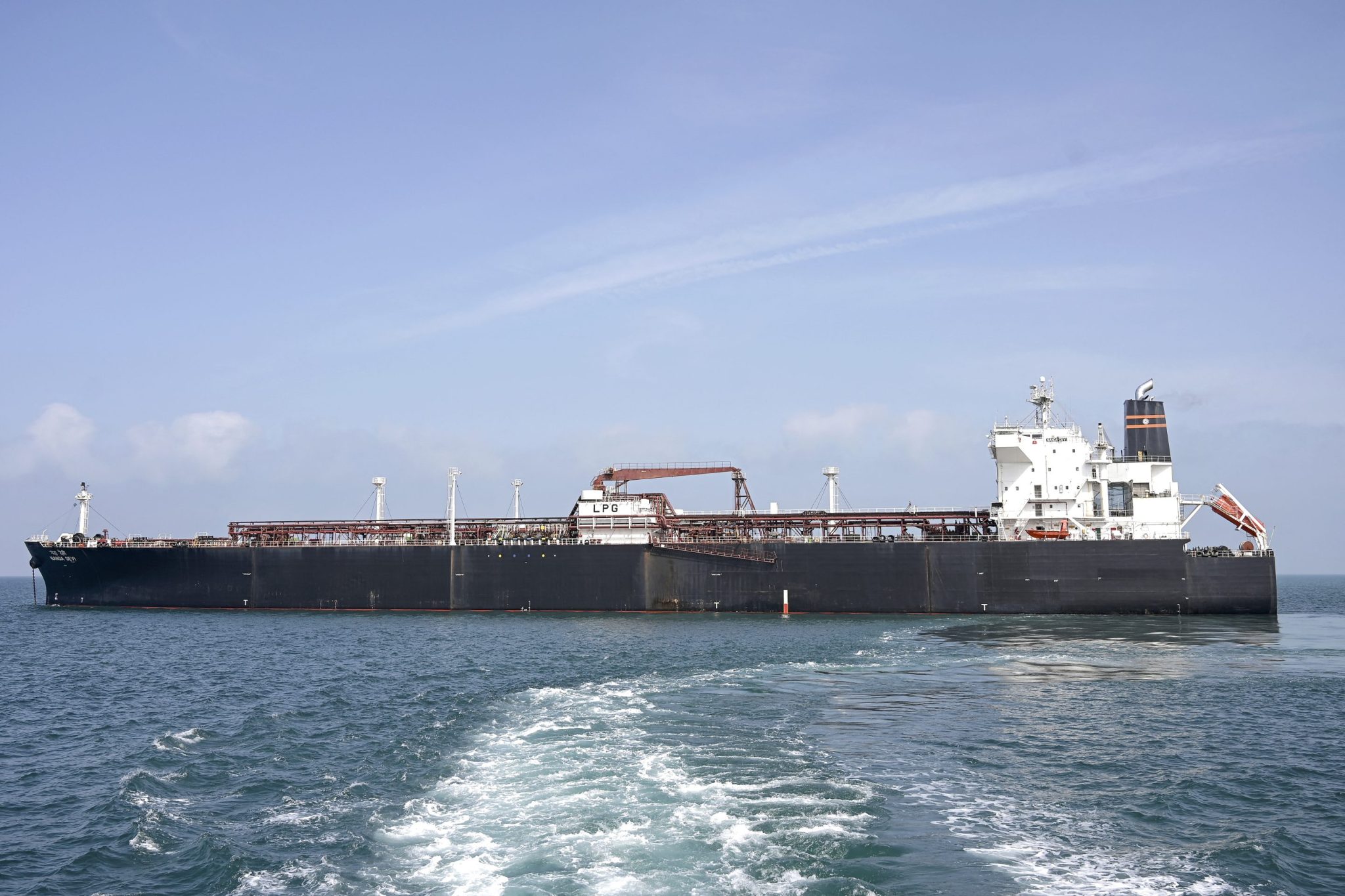
The US has allowed the sale of Iranian oil and petrochemical products that have been loaded onto tankers, its latest effort to counter rising oil prices due to the Middle East war.
The Department of Treasury issued a general license for energy that’s already on vessels as of Friday, with such purchases authorized through April 19. The measure follows similar moves for Russian oil on the water in a bid to ease an unprecedented fuel supply crunch caused by the war.
For now, the vast majority of Iran’s oil is bought by Chinese customers — mainly independent refiners known as teapots. While the US waiver would widen the pool of potential buyers, any new customers would still face the challenge of structuring deals while other restrictions on Iran, including its access to international financial markets, remain in place.
The US and Israeli war on Iran has led to a virtual halt in shipments through the Strait of Hormuz, where 20% of global oil typically transits, with only a trickle of Iranian and Chinese tankers getting through. Brent crude prices have surged more than 50% this month, while Middle Eastern oil like Abu Dhabi’s flagship Murban grade has doubled in value.
The resulting spike in fuel prices for American consumers is heaping immense pressure on the US president and the Republican Party leading up to the November midterm elections. Prolonged inflationary pressures would undercut the GOP’s ability to retain control of the Senate and the House, and the loss of either chamber threatens to derail Trump’s ability to carry out his agenda.
Read More: US Treasury Allows More Russian Oil Sales to Help Tame Prices
US Treasury Secretary Scott Bessent called the Iranian oil waiver a “narrowly tailored, short-term authorization permitting the sale of Iranian oil currently stranded at sea,” in a post on X, adding that the measure will release about 140 million barrels. He also said that Iran “will have difficulty accessing any revenue generated.”
That 140-million-barrel number likely refers to oil on water. That figure probably includes cargoes in transit which may already be booked, and may not reflect actual availability. Goldman Sachs Group Inc. estimates there are 105 million barrels of Iranian oil on water.
Iran disputed the figure, with oil ministry spokesman Saman Ghodousi saying on X that the nation has no floating crude, nor a surplus that’s available for international markets. Ghodousi said the US was simply trying to provide psychological support to the oil market.
In the US, Congressional Democrats slammed the measure, arguing Trump’s move is an economic gift to Iran in the middle of a war that the president started.
“Clown show doesn’t begin to describe it,” Virginia Democrat Don Beyer said in a post on X.
In addition to sanctions waivers, the Trump administration released more than 45 million barrels of oil from its strategic reserves and temporarily waived a century-old shipping mandate in order to lower transport costs.
The global oil benchmark settled Friday above $112 a barrel — the highest level since mid-2022 — before easing in post-settlement trading after Trump said he was considering “winding down” US military efforts against Iran.
This story was originally featured on Fortune.com