
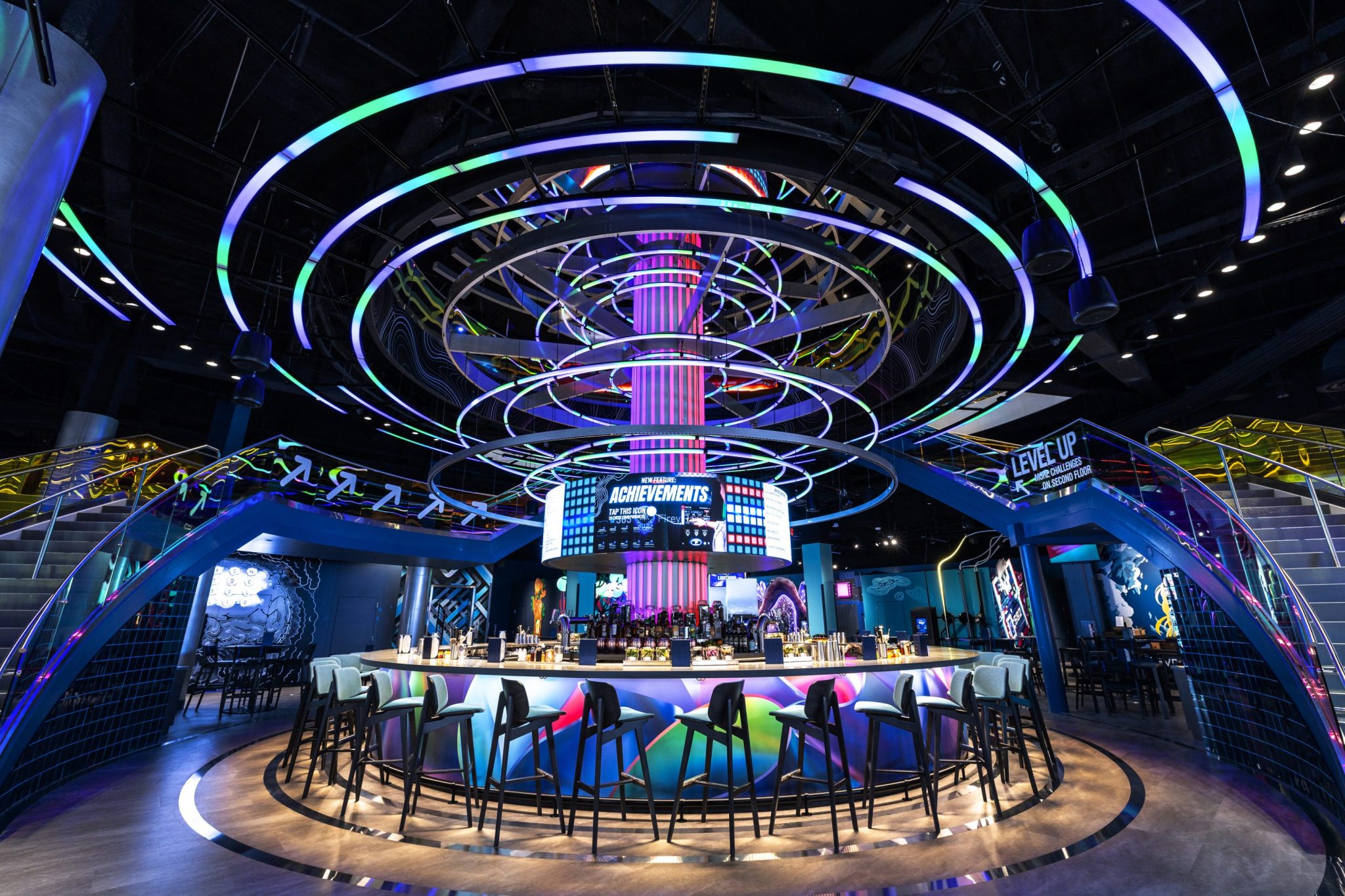
Ron Shaich spent his career building companies that come to dominate a category before anyone else can. He founded Panera and built it into a chain of more than 2,500 units. As chairman and lead investor at Cava, he led the investment that converted Zoe’s Kitchen into the Mediterranean fast-casual chain, and helped take it public. Now Shaich is applying the same playbook to entertainment, doubling down on Level99, the interactive challenge-based venue company he has backed since it was still a concept.
Act III Holdings, Shaich’s investment vehicle, is adding $50 million to its existing $50 million commitment, bringing its total stake in Level99 to $100 million. The increase follows the June opening of the company’s fifth location, at Disney Springs in Lake Buena Vista, Florida. At just three weeks in, the site was “exceeding our projections, doing really well,” said Matt DuPlessie, Level99’s founder and CEO.
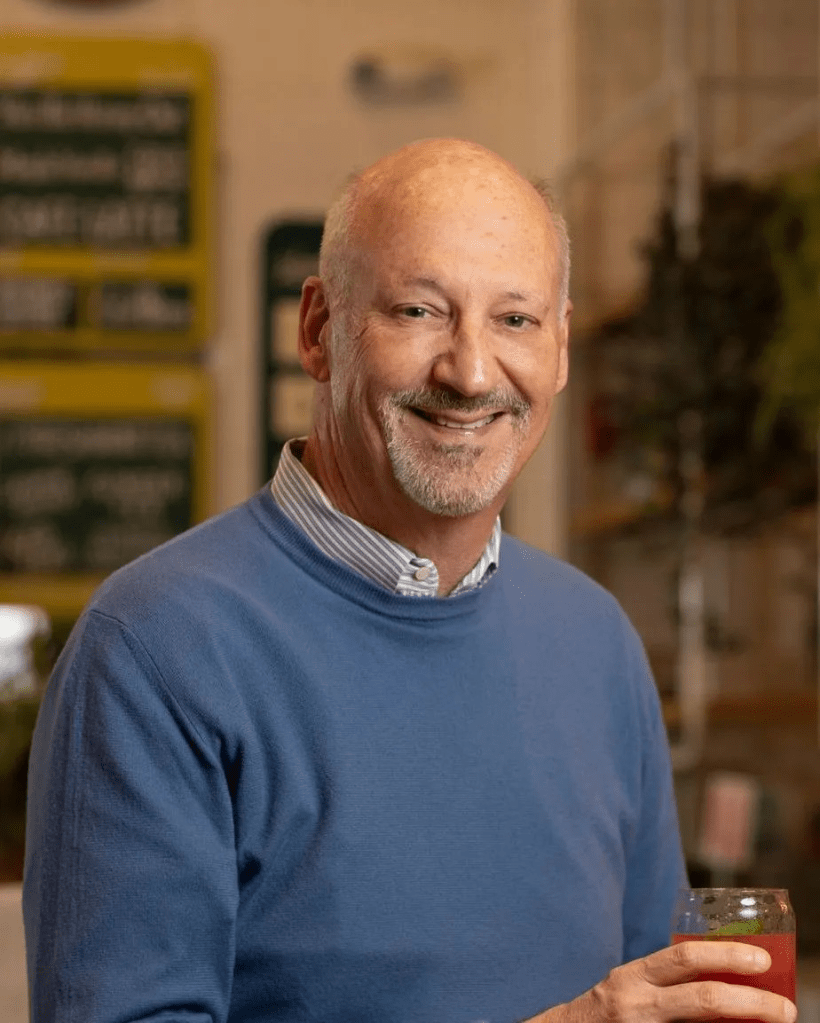
“I think Act III sees what we see: that the potential for this concept is much broader than kind of one location at a time, and we’re going to accelerate,” said DuPlessie.
Shaich has been Level99’s sole equity partner, and more partner than investor, since DuPlessie’s earliest days developing the idea. “We’ve been with Matt since day one, and since this was still a concept,” Shaich said. “I believe that Level99 has the potential to be the best business I’ve ever been involved in.”
“This isn’t something we decided to do yesterday. This is a commitment to ensuring that Matt has every ounce of resources he needs to build the organization and the capabilities ahead of the curve, and then to continue to build these out at the rate of one a quarter.”
The reasoning, Shaich said, comes down to how Act III evaluates any category before committing capital. It’s the same test the firm applied to Mediterranean fast-casual before backing Cava. “We start by looking at categories and saying: does that category have, or will it have, tailwinds in five to 10 years?” he said. “We know from our experience that the dominant player in a category wins. Think McDonald’s versus Burger King. Think Panera versus Sawyer Bakery.”
“What we do at Act III, and in all the businesses that we’re involved in—we start by looking at categories and saying: does that category have, will it have, tailwinds in five to 10 years? Just as we saw with Mediterranean, as we see with Panera today, and any of the other businesses we’re invested in—Honest Greens in Europe, Tatte [Café], and better casual dining.”
Social, challenge-based, immersive entertainment paired with real food, in his view, is a similarly powerful category—and Level99 needs the scale to dominate it before anyone else builds the same thing.
Level99 has spent roughly four years building a corporate team that now numbers more than 100 people, something unheard of for just a three-location company. “No business that has three units has any right to have 100 folks, really quality folks, in their corporate team,” DuPlessie said. “Ron and Act III invested in the future of Level99.”
Level99 opened one venue a year for its first several years—Natick, Massachusetts in 2021, Providence in 2024, Tysons, Virginia in 2025—while the company tested what resonated with customers. This year it’s opening two, with Disney Springs already live and West Hartford, Connecticut following in the fourth quarter. Next year, four.
“It’s a very thoughtful doubling,” DuPlessie said, “making sure we’ve built the systems, the capability, and have the team ahead of that growth, so that we’re not making the mistakes so many concepts do, where they get entirely focused on the new units and lose track of the ones that are already open.”

Location-based entertainment hasn’t been an easy category lately, with public operators posting years of same-store sales declines even while expanding. DuPlessie said there’s a difference between Level99 and that category. “The concepts you named—Dave & Buster’s, Chuck E. Cheese—what are those concepts? They’re a video game hall,” he said. “At Level99, all of the entertainment concept is 100% our own IP, internally developed. Half of that 100-person corporate team is our in-house creative team, engineering team, software development team. These are games that you can’t get anywhere else.”
It’s less about passive consumption and more about that physical, social play. “A whole lot of our strategy is actually taking the addictive mechanics: the compelling things that came out of those video games that brought you back to the arcade 30 or 40 years ago. This maps those onto a physical space,” DuPlessie said. “Unlike a Chuck E. Cheese or a Dave & Buster’s, you can’t get this at home.”
Creating a location where adults can not only get real food but also experience a greater sense of community through entertainment also is driving the investment, Shaich said. Level99 would be the only one of its kind in this regard. “We built Panera into a 2,500-unit, $5 billion-plus company. We built Cava, came along and bought a company five times larger, Zoe’s, a public company, converted it into Cava, because we knew that the Mediterranean was a powerful category. We wanted to dominate it, so we went to Cava with the idea and actually led that investment and helped Cava make that transformation to becoming the dominant player.”
“Nine out of 10 restaurants fail,” he continued. “We’ve had now seven successes: Au Bon Pain, Panera, Cava, Life Alive, Honest Greens in Europe, Tatte. We believe in doing this right and taking a long-term approach, and it seems to work for us.”
Building camaraderie in a digital world
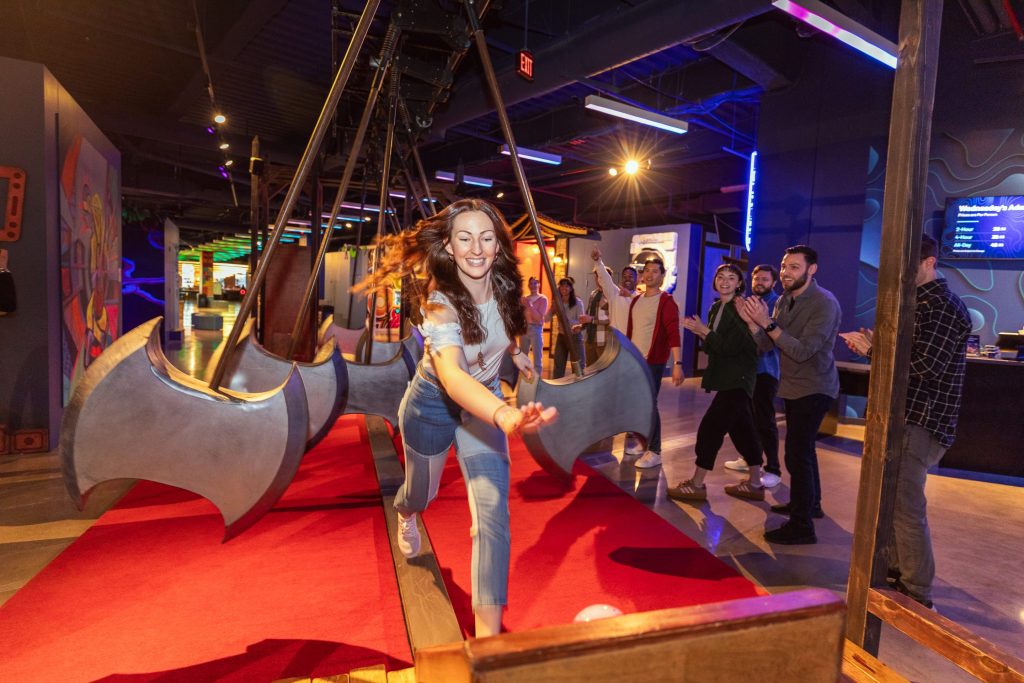
Each venue runs 35,000 to 50,000 square feet and is organized around three formats. Challenge Rooms are the core of it: one-to-four-minute collaborative puzzles for groups of two to six, ranging from physical obstacle courses to logic puzzles, spread across roughly 50 rooms per venue. “You’re in something for two, three minutes,” DuPlessie said. “Very likely, you’re going to fail on your first try, as your team doesn’t have a strategy locked in yet. You’ve got to strategize, collaborate. If you love the game, you play it again and again and again.” Duels, the second format, are staged in an open arena between rooms, built as spectator moments. DuPlessie said the Axe Run, a balance-beam challenge, is the company’s signature. The third is Hunt Art, a scavenger hunt built around murals and sculpture commissioned from local and international artists, turning the venue itself into something closer to a gallery.
“This is ‘life goal accomplished’ here,” he said. “I saw this yesterday: three women here in Natick, our first location, got Level99 tattoos on their forearm. Our logo and their player emblem, because of the bonding that their little group of friends has when they’re here.”
This all plays into getting people off their sofas and outside. “This is first and foremost a hyper-social experience. You can’t even do it solo,” DuPlessie said. “It’s exactly that third space social element: where can I get out and be with my people rather than texting them?” Shaich drew a parallel to what he learned in restaurants during the pandemic, when much of the industry bet the future was off-premises delivery. “I remember thinking to myself: yes, there’s going to be off-premises, there’s going to be delivery, but this is the second oldest profession in the world, hospitality,” he said. “People want community. People want to gather. People want to be cared for and cared about.”
“There is a business model difference in that many of these location-based entertainment concepts today are glorified bars,” DuPlessie said. “They’re trying to sell you a beer, and they’re bolting on entertainment. Level99’s business is actually driven, in terms of the P&L, by the entertainment. The food and beverage are a critical component.”
“You get the one-plus-one-equals-three effect by having great food, by having great facility, but I don’t think this would work if the entertainment weren’t worth coming out for again and again.”
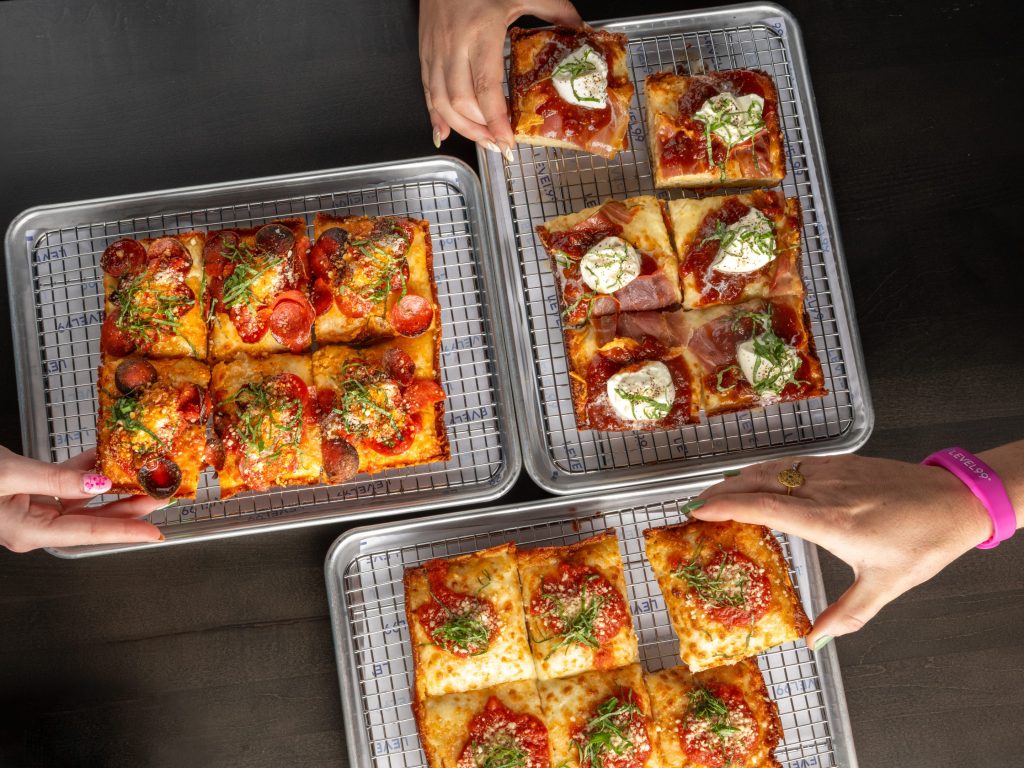
For Shaich, coming from the restaurant industry, this is in part due to the good eats. “This is real food. Everything is scratch-made. Everything is farm to table.” DuPlessie added that the standard extends to details most guests wouldn’t notice: “We are hand-shaving sweet potatoes on the slicer in the unit every day. We’re making our own dough with a blend of flour that is developed for us to have this award-winning pizza.”
Learning from the partnership
The two are coming from relatively intertwined but often separated industries. Shaich is bringing in the food ideas: those sweet potatoes on the slicer, that fresh dough. DuPlessie is scaling up strategically, providing entertainment with a quality menu. Together, they make a good team, they say.
Asked what he’d learned building a restaurant company that he didn’t expect to apply to entertainment, Shaich pointed to the same metric that’s driven his public-company track record. “The most powerful question that always exists in these businesses is how you drive recurring revenue. How do you drive comp store sales? Because that’s what drives multiples,” he said.
“I didn’t understand how complex and detail-oriented getting a restaurant right really is,” DuPlessie said. “To do this at scale, serving hundreds of thousands of people a year at a consistent level of quality, to have food that’s really crave-able that people want to come back for. There’s so much that goes into getting this right.”
“It is essentially the volumes these generate and the margins the likes of which we never see in restaurants that make this an extraordinarily impressive business,” Shaich said. “You put those two things together—a great business, a category that’s powerful, a great business model that actually performs, and a partner that does the heavy lifting—and it’s really a joy.”
This story was originally featured on Fortune.com