
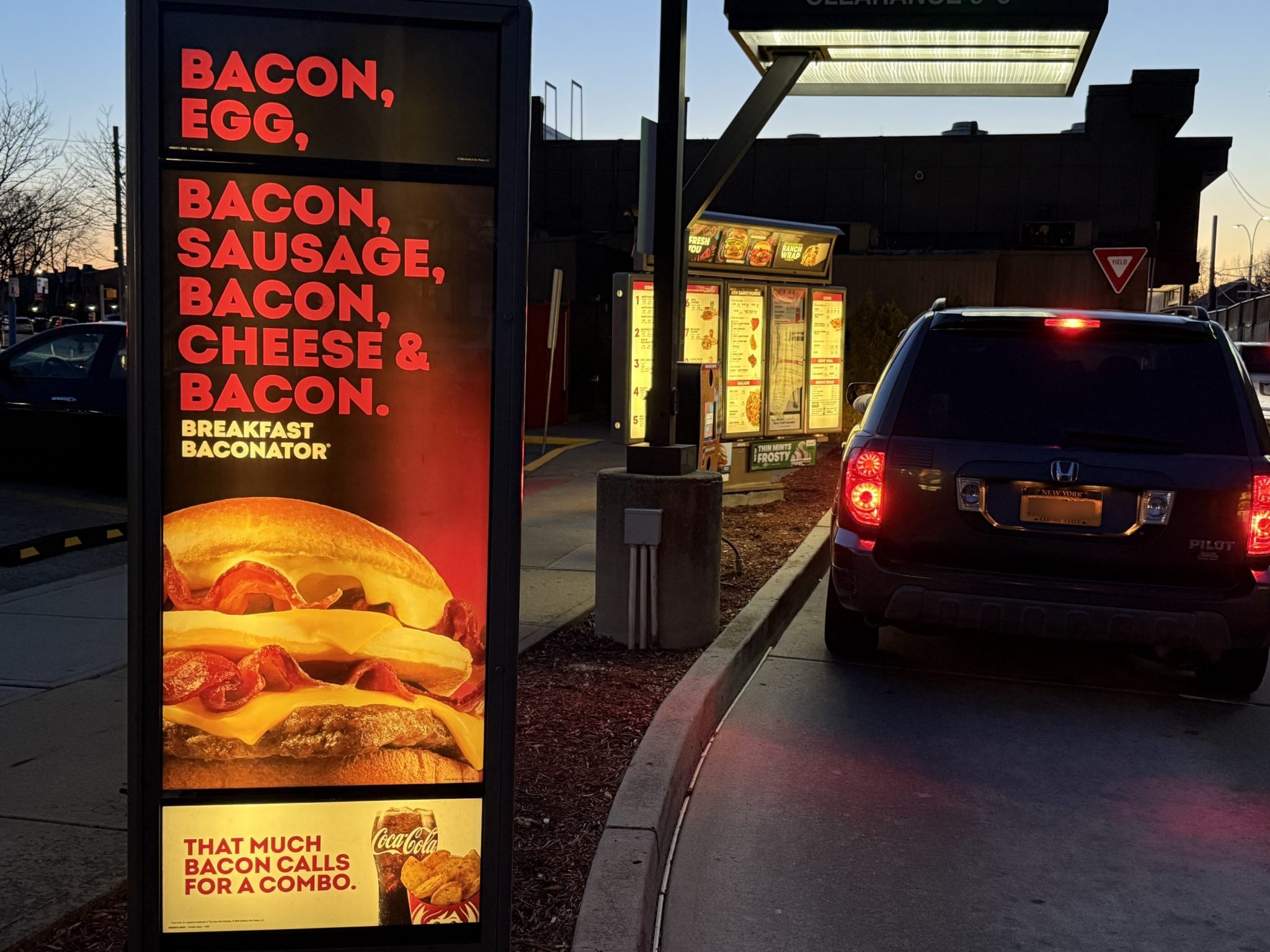
Fast-food chains have spent the past several years racing to automate everything from drive-through ordering to burger flipping using AI.
McDonald’s and Wendy’s have continued to experiment with AI ordering systems, forcing restaurants to answer more fundamental questions than whether robots can make fries or take orders. With the introduction of ArchIQ by McDonald’s earlier this year as part of its new initiative “McDonald’s > NEXT,” the fast-food giant is introducing AI-powered chatbots at its drive-through locations.
Wendy’s has also implemented AI-powered drive-through systems since 2023, under its FreshAI program. In its 2026 first quarter earnings report, Wendy’s CFO Ken Cook said he wants to continue developing the digital experience.
“We are continuing to invest in the end-to-end digital experience, leveraging consumer insights to drive frequency and engagement in the app,” he said in the conference call, “while expanding payment options at checkout to create a more seamless experience and improve conversion.”
But customers aren’t embracing the machines nearly as quickly as restaurants are deploying them.
Recent customer surveys show Americans continue to overwhelmingly prefer ordering from human employees rather than AI-powered drive-through assistants or digital kiosks, highlighting a growing disconnect between how restaurant executives define efficiency and what consumers actually value.
“The assumption is there’s a task, the computer can do it, therefore the person doesn’t,” Jerry Jacobs, a Wharton professor of sociology and management, told Fortune. “That’s one possible way of implementing it. It’s not the only way.”
McDonald’s and Wendy’s did not immediately respond to Fortune’s request for comment.
Why fast-food consumers aren’t all in on AI
For many consumers, ordering food is still a social interaction, even if it lasts less than a minute. Jacobs cautions against romanticizing customer service, however, saying employees make mistakes, become fatigued, and frequently operate under rigid corporate scripts that can limit what they do for customers.
Still, he argues restaurants shouldn’t assume automation will require eliminating workers and reducing labor costs. Instead, AI could handle repetitive ordering while employees shift toward hospitality-focused roles like greeting customers, answering questions, and resolving issues that machines struggle to address.
“You can use this as a means of making it a more satisfying customer encounter,” Jacobs said. “We shouldn’t automatically assume robots equal a subtraction of an equal number of human employees.”
Recent research from advisory firm Metrigy found about 80% of consumers preferred speaking with human order takers versus AI agents, highlighting the distinction between workplace efficiency and customer preference.
Layne Haaksma, senior research analyst at Metrigy, found that companies often overestimate consumers’ ability to accept AI system implementation. According to the company’s data, only about 22% of consumers say they prefer interacting with AI agents, even though businesses believe it is roughly 40%, Haaksma told Fortune .
“The biggest takeaway is there’s a significant gap between how fast companies are moving on AI and how ready consumers are,” Haaksma said. “Businesses think customers prefer AI much more than they actually do.”
This isn’t to say AI will never be more accepted by the general public. Data from Metrigy reports show customer preference toward AI agent chatbots grew more than four percentage points from Q1 2026 to Q2 2026. The question is not if consumers will prefer AI chatbots, it’s when.
“There hasn’t been enough time from AI’s introduction into where we are now, for consumers to actually have that trust in using it,” Haaksma said. “AI still messes up quite a bit… those mistakes really stick with consumers.”
Jacobs also resonates with that message. He said technology will always become a way to benefit human quality-of-life, and that includes for consumers.
“The people side isn’t perfect,” Jacobs said. “But we shouldn’t assume all customer interactions with people are 100% what we’d like them to be—or that replacing them automatically improves the experience.”
This story was originally featured on Fortune.com