
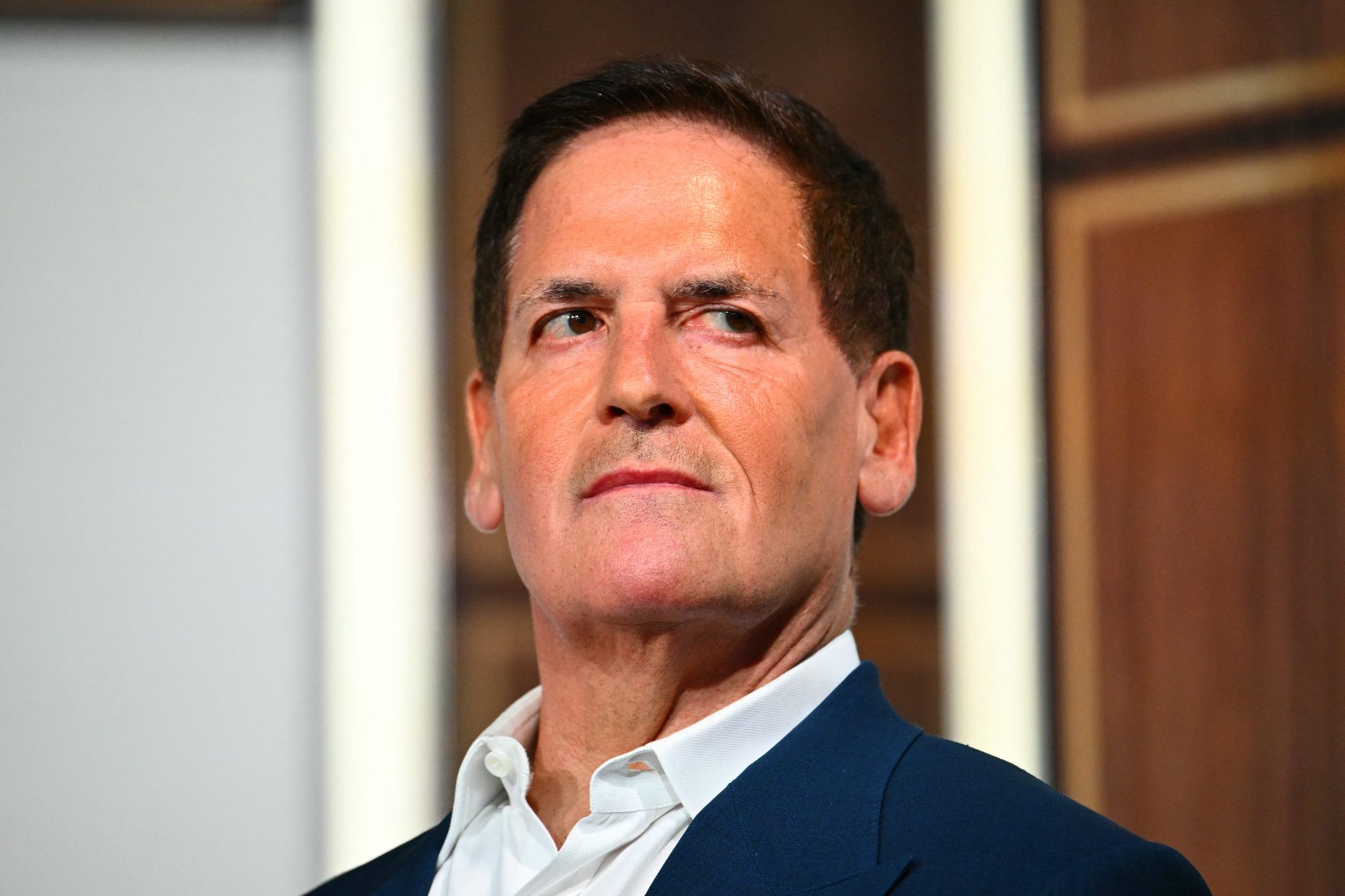
On Thursday afternoon, Mark Cuban posted what amounted to an unsolicited intervention for the AI industry. “It’s time for everyone to realize that the fight against data centers has nothing to do with data centers,” the billionaire investor wrote on X, in a post that drew more than 700,000 views within hours. “They have become a proxy for the hate towards AI and the concentration and accumulation of wealth it’s creating.”
By the time Cuban hit send, two economists had already made the same argument—in more rigorous, and in some ways more damning, terms.
In a guest essay published Thursday in The New York Times, venture capitalist and MIT fellow Paul Kedrosky argued that American AI pessimism isn’t cultural, isn’t driven by misinformation, and isn’t the reflexive technophobia the industry likes to blame. It correlates instead with one specific variable: labor market institutions.
And in a piece published the same morning on his Substack, Nobel laureate and former Times (and Fortune) columnist Paul Krugman assembled a multipart indictment of the industry itself, concluding that the backlash is not “normal skepticism about change. This intense backlash is special.”
The very same day, in its Top of Mind report, Goldman Sachs economist Joseph Briggs estimated that up to 9% of the American labor force—roughly 15 million workers—could be displaced during the decadelong AI transition, concentrated in the cognitive, routine white-collar jobs that define the American middle class. He quickly added that he believes the transition will be temporary and AI will create many more new jobs than it destroys over the long term. Still, 15 million is a lot of people.
Three voices. One day. One verdict. The AI industry has a massive perception problem, and it’s not fixable with better messaging.
Krugman: They told us it was coming
The first thing to understand about the backlash, Krugman argues, is that the industry largely manufactured it. Anthropic CEO Dario Amodei declared in a widely circulated interview that AI could eliminate half of entry-level white-collar jobs and push unemployment to 20% within five years and OpenAI CEO Sam Altman promoted similarly apocalyptic visions. That strategy, Krugman argued, was financial: dazzle investors, terrify businesses into rapid adoption and secure funding. The plan worked only too well.
“Only belatedly did they realize that declaring that your technology will wreak devastation would lead to a public backlash,” Krugman writes, “and that this backlash would be a serious problem.” By then, the image had hardened. AI wasn’t a productivity tool or a platform. It was something being done to you—your job, your creative work, your profession, your future, by people who had already told you they were coming for it.
Krugman adds a second layer: forced adoption. Americans aren’t merely anxious about AI in the abstract. They’re being compelled to use it—by employers responding to financial market pressure and by platforms that have replaced their existing products without offering an opt-out.
Kedrosky: Why America is different
Other countries are watching all of this, and most of them feel fine. That’s the startling finding at the center of Kedrosky’s Times essay. A survey of 24,000 adults across 30 countries found that citizens of nearly every nation view AI more favorably than Americans do.
The industry’s explanation, predictably, is that Americans have been misinformed. Fix the messaging, get the optimistic voices out there. There is, Kedrosky notes drily, “already an entire gig economy of AI boosterism.”
But the data doesn’t support the messaging theory. If American pessimism were a communication problem, it would correlate with media consumption, education levels or political affiliation. Instead it cuts across all of those categories and correlates with the structure of the American labor market, specifically, what happens to you when you lose your job.
In Norway, job loss means receiving roughly 67% of your previous wages while you search for the next position. In France, it’s 66% and in Germany it’s 60%. But in the United States, losing your job means losing your income, and your health coverage, simultaneously, often for an entire family.
“Job loss in the United States is more threatening than anywhere else in the wealthy world,” Kedrosky writes. The pessimism about the technology, Kedrosky concludes, is not irrational but a completely rational response to a technology tailor-made to crack the most fragile joints of the American socioeconomic structure.
Goldman Sachs’s relatively sanguine baseline forecast—that AI-driven displacement will prove temporary—rests on the explicit assumption that the dynamism of the American labor market will create new jobs faster than AI destroys them. That is precisely the variable Kedrosky’s structural argument puts in question.
Cuban: The John Galt problem
Cuban’s post lands with behavioral and cultural diagnosis reinforcing the same conclusion: the tech industry is not just failing to address the problem, it is constitutionally incapable of doing so.
“The big LLMs have lost the PR battle,” he wrote. “Why? Because they all suck at putting people first.” He accused them of having a Silicon Valley “attitude” that “makes them all think they are John Galt saving the world.”
Galt is a character from Ayn Rand, of course. The protagonist of Atlas Shrugged is a visionary who believes civilization depends on him and his peers—that obligations to the broader public are a form of coercion, that the masses neither understand nor deserve the fruits of great minds. That mindset makes the kind of genuine community engagement that this moment requires not just unlikely, but almost impossible.
MIT’s Daron Acemoglu—interviewed in the Goldman report—gives the John Galt critique its economic form. The AI industry, he argues, has the technical capacity to build tools that complement human workers rather than replace them, but it is choosing not to. “A shift in the industry’s priorities and incentives that leads to greater investment in the complementary path could result in a much more positive outcome for labor,” he told Goldman. “But should things continue as they are, I would expect bigger net job losses within the next 10 to 15 years.” The industry knows the fork in the road exists. It keeps taking the same turn.
Krugman makes the same point from a different angle. In 2015, Pew found that 71% of Americans said tech companies had a positive impact on the country. By 2022, the year ChatGPT launched, that goodwill had almost entirely evaporated—eroded by years of what Krugman calls the “enshittification” of tech products, the psychic damage of social media, and a growing public awareness of wealth concentration at the top. AI didn’t enter a neutral environment, but arrived into a trust deficit the industry had spent years building.
What would actually help
Cuban’s prescription is direct: stop buying politicians, stop hiring celebrities, stop explaining why AI is good for humanity. Go to the towns and cities that will be disrupted and ask them what they need. Go to the working artists and creative unions in Los Angeles and New York, not the studios, he stresses, and ask what support would look like. Then do what they say.
“You will need to do what they ask,” he writes. “Billions of dollars is a lot of money across towns and city programs. Across the major LLMs, it’s a cost of doing business.”
That’s a compelling prescription, but Kedrosky’s structural argument implies a harder truth: even if every AI company did exactly what Cuban recommends, it would not resolve the underlying condition. Community investment tours and artist funds don’t decouple health care from employment or build an unemployment insurance system that actually replaces income at a meaningful level.
Cuban ends on an oddly hopeful, colorful note as he issued a warning to the leaders of the AI industry. “Given the number of data centers and power that is needed, today and going forward , If you don’t kiss the asses of the people that go to work every day, and are just trying to pay their bills, you will fall far far short of the capacity you need to make your business work.” Do the John Galts of the world know that the power is really with the people?
This story was originally featured on Fortune.com