
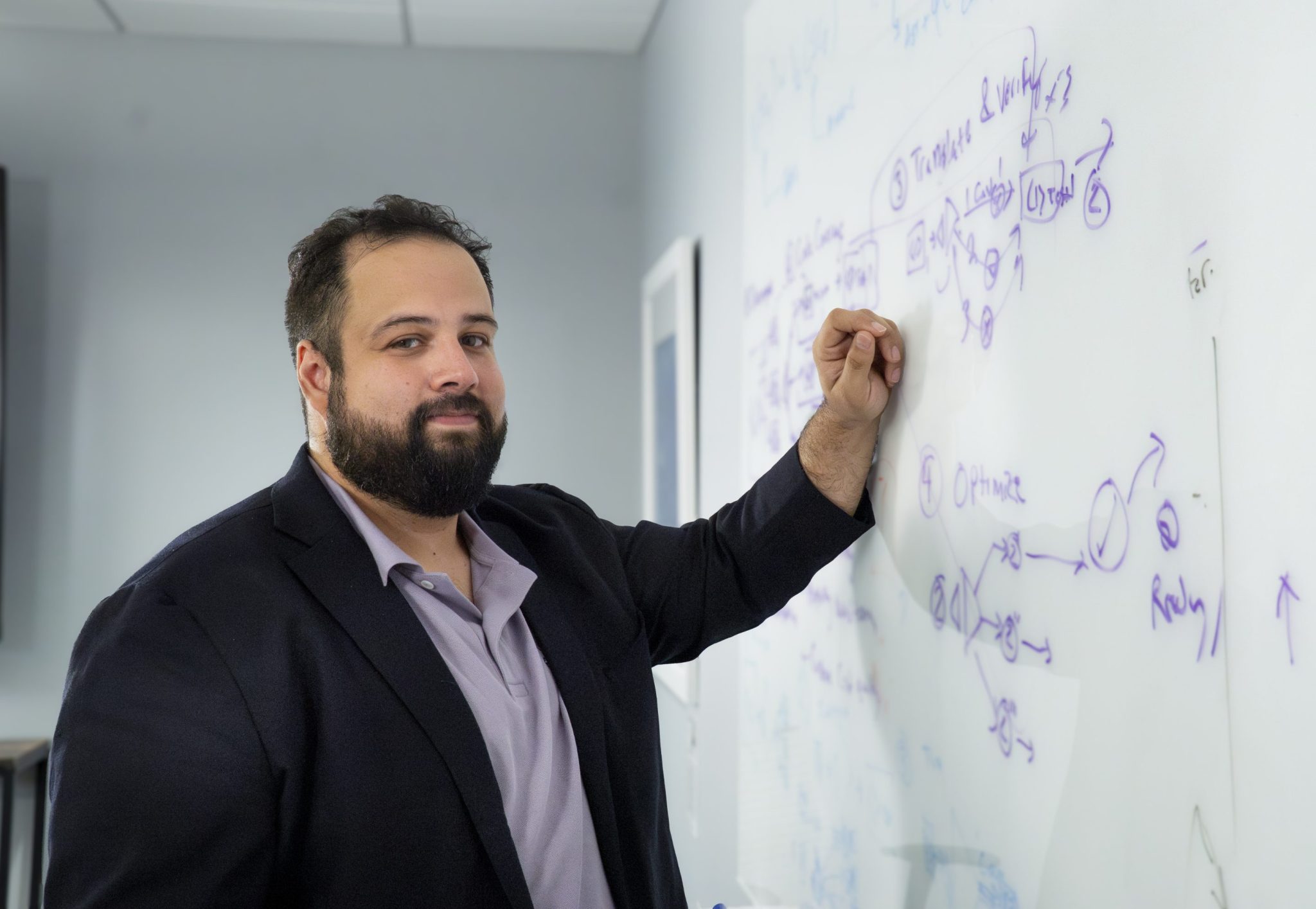
Preston Fore here. Landing a defense contract has historically meant navigating layers of government bureaucracy, with proposals often taking years to turn into cash. But software unicorn Code Metal is getting something new defense contractors rarely get from the Pentagon: speed.
The Boston-based firm just landed an $80 million contract to modernize and AI-enable WarMatrix, the Department of War’s wargaming simulation environment, Fortune learned exclusively. The process only took less than 12 months.
“I have never seen them move this fast, and that’s been really exciting,” CEO Peter Morales told Fortune, adding that after securing $17 million for the initial operating capability—the minimum version of the system that can be usefully deployed—they received the full funding as an Other Transaction Authority (OTA) agreement.
Code Metal—which builds AI-powered software to translate code across programming languages and verify that it works on different types of hardware—was valued at $1.25 billion in February, when it secured its $125 million Series B, led by Salesforce Ventures.
The deal comes as venture-backed companies race to turn investors’ enthusiasm for defense technology into actual government business. It also reflects a broader push to bring the Pentagon’s vast, decades-old software infrastructure into the AI era.
WarMatrix is designed to help military planners run sophisticated wargaming and analysis, and Code Metal’s work is expected to allow analyses that once took months to be completed in days.
“We’re not replacing decades of validated code,” Morales said. “We’re really making it reachable to the warfighter and to AI.”
Morales spent roughly a decade working at the intersection of hardware and software, including at British defense contractor BAE Systems, MIT’s Lincoln Laboratory, and Microsoft. At BAE, he worked on software and real-time systems for the controversial but vital F-35 fighter jet, where he said he learned how quickly military technology can fall behind the commercial world.
That has created an opportunity for startups like Code Metal to help the Pentagon preserve decades of validated technology by building a software layer that makes existing infrastructure compatible with newer tools—including AI.
“The reason this industry has been so ripe for disruption is we’re willing to show up with something working rather than a slide deck and gamble that we believe that this is important,” Morales, 38, said.
About 75% of Code Metal’s business is currently defense-related. Morales necessarily doesn’t see the defense primes—the long-established defense contractors—as competition, but as rather partners and even clients. Code Metal has already worked with the U.S. Air Force as well as Raytheon, L3Harris, and Boeing.
“The defense primes do things that only they could do,” said Morales. “They’re not going anywhere. But in some of these forward pushing areas like AI, they understand they need help, and that’s why we’re working with them so closely to help them go faster as well.”
Roughly 10,000 new defense companies have entered the market over the past two years, according to an analysis by the Center for Strategic and International Studies. And in the first quarter of 2026, VCs deployed a record $19.8 billion into defense tech across 262 deals.
Among the 15 highest-valued defense-tech startups—including Anduril and Saronic—Pentagon contract spending tripled last fiscal year from 2022, The Wall Street Journal reported. However, those companies still only account for less than 1% of total dollars for all defense contractors.
For startups like Code Metal—which employs 123 people—the challenge now is turning one-off opportunities, like the new $80 million Pentagon deal, into repeatable, expandable business.
That’s part of the reason the company brought in Ryan Aytay earlier this year to serve as president and COO. Aytay, the former chief business officer at Salesforce and CEO of Tableau, brings the kind of sales and scaling experience Code Metal will need as it looks to turn its early defense wins into a much larger business.
Morales described Aytay as a Sheryl Sandberg-type leader who can help turn Code Metal into an “n of 1”—a company that, like Tesla or Palantir, creates its own category.
ICYMI… The deluge of executive departures at OpenAI continues, as the company announced Denise Dresser would be leaving yesterday. Read more here.
See you Monday,
Preston Fore
X: @forepreston
Email: preston.fore@fortune.com
Submit a deal for the Term Sheet newsletter here.
Joey Abrams curated the deals section of today’s newsletter. Subscribe here.
This story was originally featured on Fortune.com