
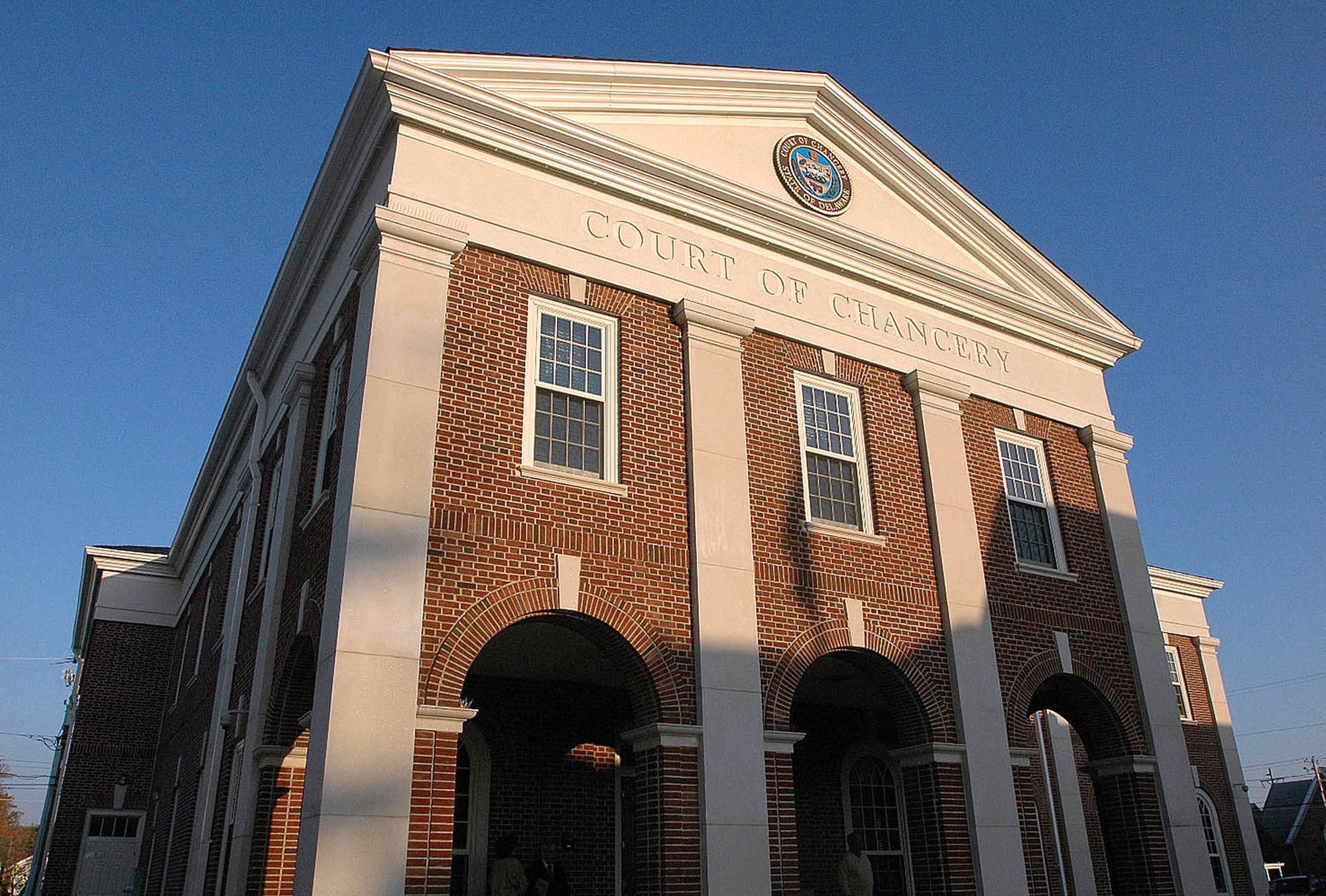
The morning after we wrote in Fortune about a controversial Chancery Court decision involving Cloudflare, Vice Chancellor J. Travis Laster moved with uncommon speed to certify an interlocutory appeal of his ruling to the Delaware Supreme Court.
Corporate boards might read that as a sign the system is correcting itself. They shouldn’t, at least not yet.
The appeal was necessary because Laster used an unusually expansive reading of “good faith” to enjoin the Cloudflare board’s decision about its capital structure.
A vague standard
With corporate anchoring fees rivaling personal income taxes as Delaware’s primary source of revenue, Delaware’s wise leaders, including its governor and its legislature, saw this exodus coming, and tried to stem its root cause. In March 2025, Delaware passed Senate Bill 21 (SB 21), the most significant rewrite of its corporate code in a generation, to stop the flow of companies out of the state. SB 21 was generally recognized to have been a direct response to a run of activist rulings from the Court of Chancery, which were widely seen as blatant judicial overreach.
The spirit of SB 21 is simple: if a board routes a possibly “conflicted” deal through a committee of independent directors with real power to reject it, the deal is considered “kosher.” This means no injunctions, no damages, no trial.
Indeed, Laster’s 142-page opinion concedes the legitimacy of SB 21 and its applicability to this case. He held the directors were independent. He held they were not negligent. He wrote that their process showed “all the outward signs of diligent and careful effort.” By his own account, virtually every requirement the legislature wrote was met by the Cloudflare board.
He enjoined the transaction anyway, on a novel basis. SB 21 does require that the committee act “in good faith,” but Laster’s route was to re-define what good faith entails – even though the legislative intent of SB 21 and the surrounding debate in the legislature, clearly shows that the Delaware legislature intended SB 21 to be more deferential to independent boards, not less.
The term “good faith” was not a third level of diligence beyond the duty of care and duty of loyalty, but merely presumed to be the spirit of board actions. Before this, good faith had been previously generally assumed, in deference to independent boards, with nary any heightened review threshold, much less any invocation to enjoin a transaction.
Instead, he pointed in part to the fact that the board used Signal to communicate about sensitive strategic information they presumably did not want competitors obtaining, irrespective of litigation, and to a CEO who was known to have a hot temper, even though the temperament of the entrepreneur is irrelevant to good faith and typical of creative businesses in technology, media, fashion and the like.
From those disconnected scraps, the court inferred that the committee was serving the founders rather than bargaining against them, or what Laster, borrowing from the 2011 Southern Peru case, called “a controlled mindset”, as proof of possible lack of good faith by the committee.
In analyzing Laster’s novel interpretation of what “good faith” means, readers might ask whether Laster was merely applying the statute, SB 21, rather than inventing a new standard. But that flies in the face of the legislative history of SB 21, which clearly suggests the intent of the Delaware legislature was to try to drive greater predictability and greater deference to independent boards, rather than drive more elevated scrutiny of those same boards. Against that backdrop, Laster’s idiosyncratic, broader reading of ‘good faith’ substantively guts the protections SB21 was meant to provide.
But even more importantly, and legally salient; Laster’s interpretation of ‘good faith’ is far from what “good faith” has always historically meant in Delaware, from a legal perspective. The existing Delaware definition of bad faith is grounded in scienter, the requirement of showing that individuals acted with knowledge and intent of wrongdoing, together with the requirement that each board member be assessed individually to determine whether a majority intentionally acted in bad faith. That is the Disney line of cases.
In 2006, the Delaware Supreme Court defined bad faith as “intentional dereliction of duty, a conscious disregard for one’s responsibilities,” and held that gross negligence, “without more, cannot constitute bad faith.” Stone v. Ritter that same year made good faith a “subsidiary element” of the duty of loyalty rather than a freestanding duty. And Lyondell in 2009 held that directors who merely “failed to do all that they should have” breached only their duty of care, while “only if they knowingly and completely failed to undertake their responsibilities” could they be found disloyal.
Startlingly, Laster largely set aside that definition in practice. A board’s understandable use of Signal to communicate about sensitive strategic information, or a CEO known to have a hot temper, amounts to nothing even remotely resembling scienter, which is knowing or willful misconduct. The opinion likewise faults the committee for not obtaining a fairness opinion while conceding, in its own footnote, that “Delaware courts have stated that there is no duty to obtain a fairness opinion.” Under Lyondell, a process that could have been better is a question of care, not loyalty, and Laster found no failure of care.
Most tellingly, he acknowledged that without what he called the defendants’ “credibility problems,” he “could have concluded” the safe harbor applied. In other words, the statute’s protection now turns on whether a trial judge likes the witnesses.
If a board can be independent, informed, and diligent and still be found to have acted in bad faith, directors are left without a clear rule to follow. That uncertainty is exactly what is pushing companies to reincorporate elsewhere.
A disputed record, headed to the Supreme Court
Laster’s certification also characterizes the facts in ways we believe are wrong, and it is the trial court’s account of the record that the Supreme Court will review.
He wrote that “the Committee looked for and found an academic who would say that…maintaining founder control would be good for the Company.” Our research, published for years in academic outlets and in Fortune, describes when dual-class shares fail as well as when they work. We have found that well-governed, founder-led companies with dual-class shares have, as a group, outperformed, and that such structures should expire when they no longer make sense or are abused. Laster also suggested that the company’s financial advisors had data disputing our conclusions. However, in reality, the financial advisors did not, have any such counter evidence, as their own presentations make clear.
He also ruled on the credibility of parties he never met, relying on a one-hour hearing on the paper record alone. The Supreme Court therefore has no firsthand insight from the trial judge to which it could defer.
Reversal without relief
The Delaware Supreme Court has reversed Laster in more than 30 decisions, but it has repeatedly remanded those cases back to his courtroom. For example, the Boardwalk Pipeline litigation, stemming from Loews’ 2018 buyout of Boardwalk’s public unitholders, has bounced between the two courts for eight years and remains unresolved. Litigation on that scale is a costly distraction for management and boards, on top of fees that can run from $60 million to more than half a billion dollars per company.
For example, when the Delaware Supreme Court reversed him in his controversial Aruba decision in 2019, they issued a rare rebuke with withering criticism, noting that Laster’s opinion “could be seen” as “a results-oriented move to generate an odd result compelled by his personal frustration at being reversed in Dell,” that the approach “was in no way dictated by a rational reading of Dell,” that his agency-cost reasoning was “not grounded in the record,” and that by injecting a valuation theory the plaintiff “had not itself posited,” he “injected due process and fairness problems into the proceedings.”
While that sounds like a promising development, the court had the power to reassign remanded cases to a different judge, and has not done so. This undermines their own reversal of the Chancery Court, repeatedly throwing the firm back into the arms of its previous judge to invent a serious of unique reasons to derail the deal.
What boards should take from this
Certifying an appeal is not the same as a predictable legal regime, and predictability is what boards cite when they leave Delaware. Until the Supreme Court clarifies what “good faith” requires of an independent, diligent board in a predictable and non-arbitrary way, and until appellate reversals carry real consequences on remand, directors should assume that a sound process may not be enough to protect their decisions in Chancery.
As the Roman poet Juvenal asked, “Quis custodiet ipsos custodes?” Who guards the guards?
Disclosure: Cloudflare’s special committee retained us, given our widely recognize expertise as governance scholars, to present our published research on when dual-class share structures help and hurt companies, as it deliberated its own structure based upon our analysis of the total universe of major firms with such arrangements. We were not asked to opine on the terms of Cloudflare’s proposed reclassification, did not do so, and take no position on its design. We have no relationship with Vice Chancellor J. Travis Laster.
The opinions expressed in Fortune.com commentary pieces are solely the views of their authors and do not necessarily reflect the opinions and beliefs of Fortune.
This story was originally featured on Fortune.com