
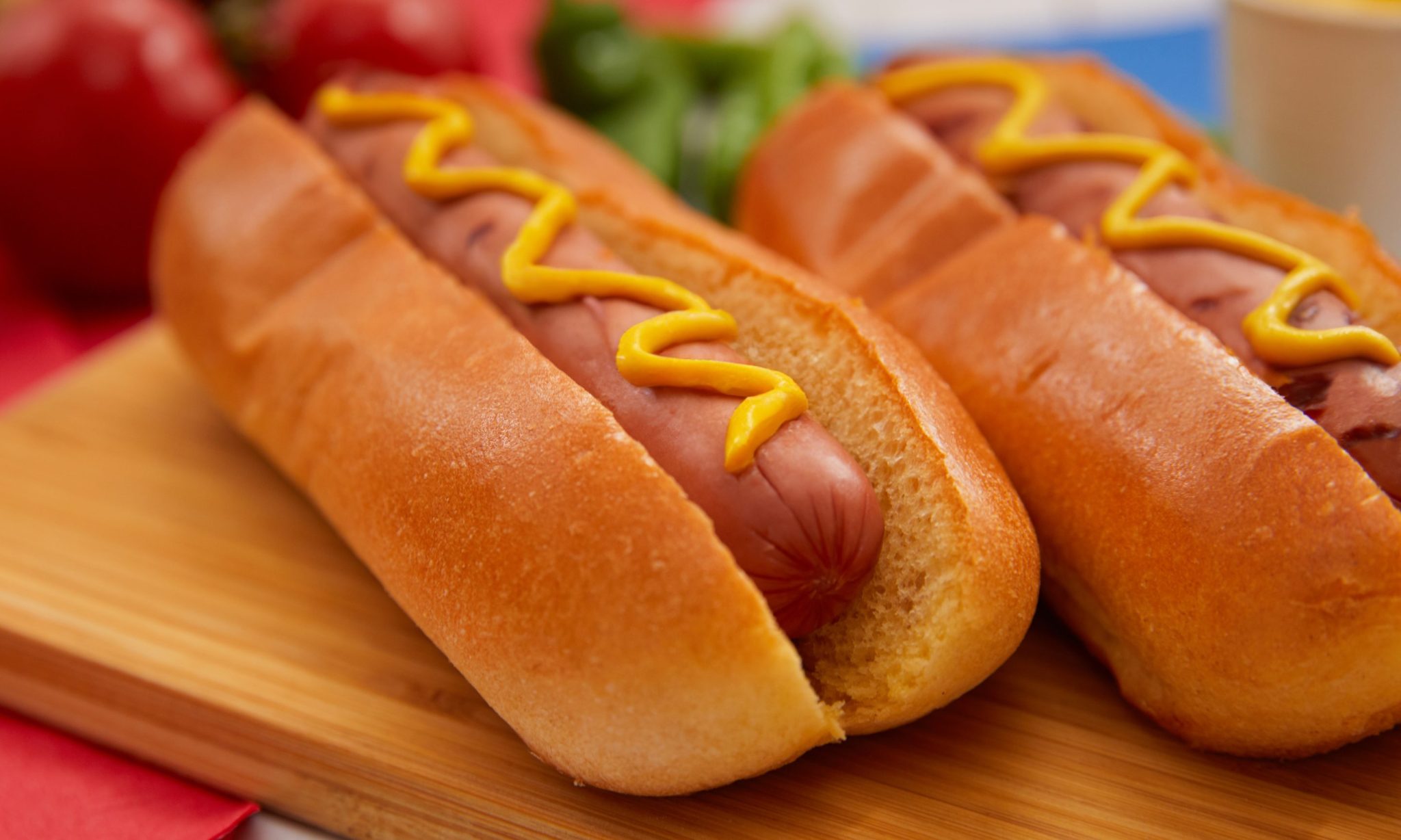
The Fourth of July always means backyard grills and boardwalk crowds, but this year the numbers carry extra weight. As the country marks its 250th Independence Day, Americans will consume 150 million hot dogs today alone, enough to stretch from Washington, D.C. to Los Angeles more than five times over, according to the National Hot Dog and Sausage Council. That single day of gluttony caps “hot dog season,” the stretch between Memorial Day and Labor Day that accounts for roughly 38% of annual retail hot dog sales, worth about $1.16 billion. July alone makes up 10% of the year’s total retail sales.
At the center of it all, as always, is Coney Island. The Nathan’s Famous Fourth of July International Hot Dog Eating Contest returns to the corner of Surf and Stillwell, where Joey Chestnut—the sport’s all-time leader with 17 titles and a personal-record 76 hot dogs and buns eaten in 2021—is favored to eat around 70 hot dogs in 10 minutes en route to his 18th Mustard Belt. Miki Sudo, the women’s world-record holder at 51 hot dogs and buns, is chasing her fifth straight championship and 12th overall.
This year’s contest carries a bigger backdrop than usual. The World Cup has already reshaped New York’s summer—from ticket-pricing controversies to Mayor Zohran Mamdani and Gov. Kathy Hochul underwriting a free Central Park watch party for fans priced out of MetLife Stadium—and Nathan’s says it’s feeling the overflow.
“Typically, on July 4th, we see approximately 35,000 fans come out to watch the event in person,” Nathan’s VP of Marketing at Nathan’s Famous, Phil McCann told Fortune. “Because of the influx of tourists with the World Cup being in town, and the Nathan’s Hot Dog Eating Contest being such a bucket list event, the NYPD estimates crowds will be much larger this year.” Nathan’s has been meeting regularly with city agencies, including the NYPD, to plan security around the swelling audience.
On the retail side, McCann said the momentum is already showing up in receipts: “We have seen an uptick in sales versus a year ago at our flagship and Coney Island boardwalk locations.” That’s notable given sports economists have found the World Cup’s broader economic windfall for host cities is often overstated—Coney Island’s hot dog stand appears to be one of the rare local businesses actually capturing some of that tourist spending rather than watching it flow straight to FIFA.
Chestnut’s return itself is a story. He sat out the 2024 contest entirely after signing a sponsorship deal with Impossible Foods, a plant-based rival that violated Nathan’s longstanding exclusivity rules—a split Major League Eating called “devastating” at the time, and one that left Patrick Bertoletti to win the title in his absence. Chestnut settled back in fully last year, reclaiming the Mustard Belt with 70.5 hot dogs. He returns this year with the Impossible Foods chapter behind him, though not entirely free of controversy: he’s still serving a 180-day probation sentence after pleading guilty to misdemeanor battery this spring, following an incident at an Indiana bar.
Hot dog eating sees the prediction market
The other thing that’s changed is who’s putting money on it. Five years ago, betting on Nathan’s was a novelty afterthought—a niche prop tucked into a handful of sportsbooks. This year, it’s booked almost everywhere. DraftKings, FanDuel and BetMGM are all running full odds boards, with Chestnut priced as high as -2500 to win and an over/under on his hot dog total set at 70.5. Kalshi, the regulated prediction market, has its own contracts on who wins and exactly how many hot dogs the winner eats, including whether Chestnut breaks his own record of 76.
That expansion mirrors a much bigger shift already underway in American gambling. Prediction markets like Kalshi have exploded over the past year, pulling sports betting away from traditional state-regulated books and into a federally regulated gray zone—Kalshi alone processed $871 million in trading volume on Super Bowl Sunday this year, and the fight over whether that activity even counts as gambling is now headed toward the Supreme Court. Novelty markets like Nathan’s are riding that same wave: Americans legally bet $166.94 billion on sports in 2025, an 11% increase from 2024 and a new industry record, according to the American Gaming Association—and sportsbooks and prediction platforms alike are increasingly looking to any event, however small, to keep bettors trading through the summer sports lull.
This story was originally featured on Fortune.com