
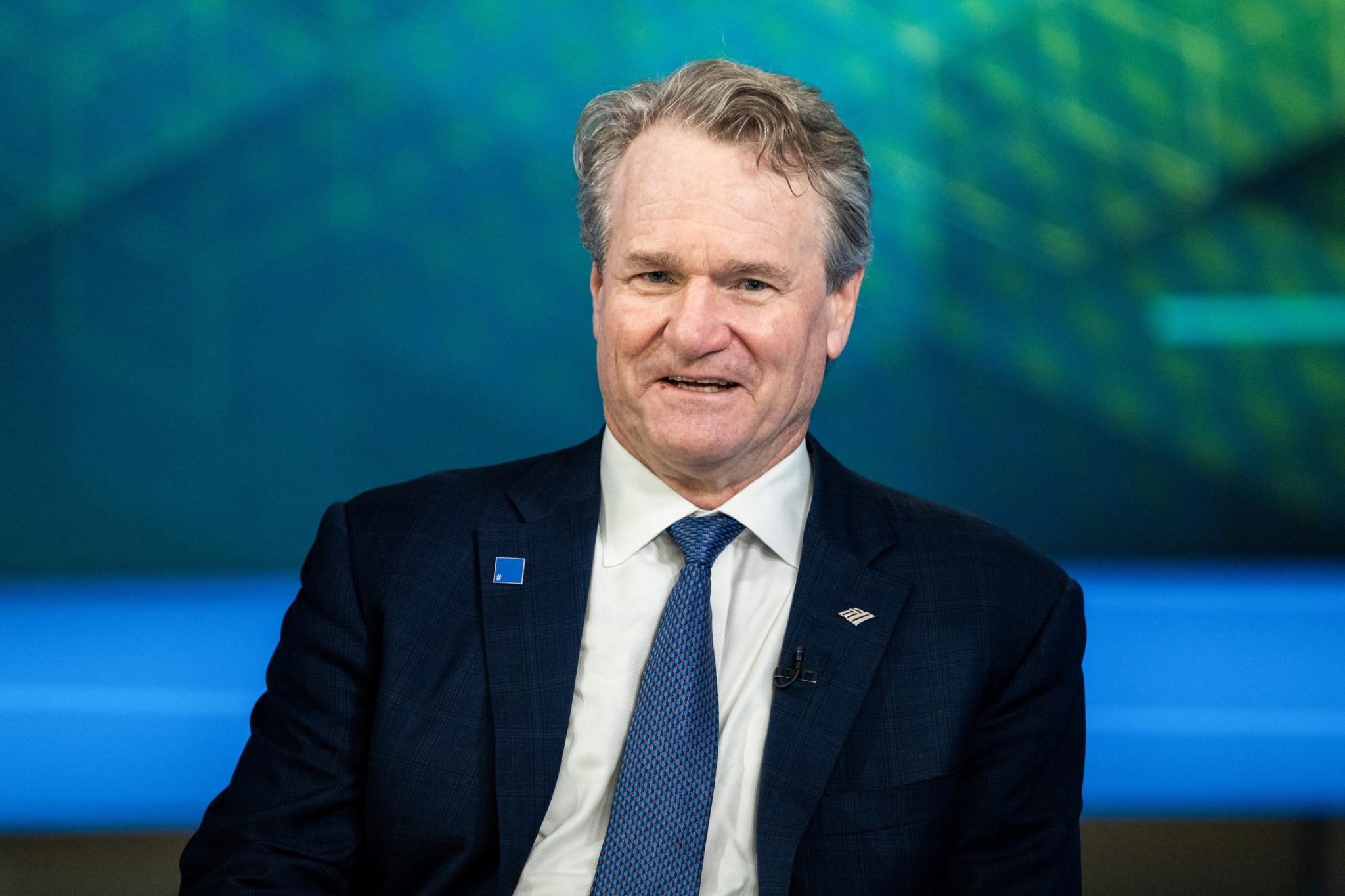
Bank of America CEO Brian Moynihan says Gen Z is scared about AI and the job market, but he has words of encouragement.
The bank recently hired 2,000 top grads from 200,000 applications, the executive said in an interview with CBS News‘ Margaret Brennan on Face the Nation. As companies cite AI for widespread layoffs, Moynihan acknowledges that many young people feel scared and uncertain about the future.
“My advice to those kids, if you ask them if they’re worried about, they say they’re worried about—these are kids that we hire, 200,000 applications, we hire 2000 people.” Moynihan added that “if you ask them if they’re scared, they say they are. And I understand that. But I say, harness it … It’ll be your world ahead of you,” Moynihan said.
Moynihan said it’s too soon to say how AI will play out in the job market, but he hopes to use efficiencies created by the technology to invest in more growth.
“We want to drive more growth. So the AI will be spent—the efficiencies from AI will be spent to keep growing the company, I think,” he said.
Moynihan also said Americans are focusing too much on the Fed and its impact on the economy. He argued that the private sector is a more important driver of economic growth.
“The idea that we are, like, hanging on the thread by the Fed moving rates 25 basis points, it seems to me we’ve gotten out of whack,” he said.
Gen Z’s hiring fears
Jerome Powell and multiple economists have validated that Gen Z is facing a genuine “hiring nightmare,” especially for recent college graduates trying to land their first white-collar job. This is tied to a low‑hire, low‑fire labor market, the rapid automation of entry‑level roles, and a tech industry whose workforce is getting older as Gen Z’s presence shrinks.
In September 2025, Powell used his post‑meeting press conference to highlight an “interesting labor market” where “kids coming out of college and younger people, minorities, are having a hard time finding jobs.” He emphasized that the job-finding rate is “very, very low” even as layoffs remain subdued, creating a stagnant low‑hiring, low‑firing environment that is particularly punishing for new entrants. Asked whether AI was to blame, he called it “probably a factor” but not the main driver, suggesting that slower overall job creation plus some AI substitution is squeezing young workers at precisely the moment they try to get on the ladder.
Employers are using AI to automate the predictable, process‑heavy tasks that once justified many junior roles, especially in corporate and tech settings. Platforms that track early‑career hiring, like Handshake, point to a double squeeze: entry‑level job postings in corporate roles are down roughly 15% year over year, while references to “AI” in job descriptions have jumped about 400% over two years. Economists like Dartmouth’s David Blanchflower tell Fortune that even when young people do find work, they report rising “despair” and a pervasive “this job sucks” sentiment, compounding the effect of higher recent‑grad unemployment rates compared with the national average.
Some unemployed Gen Z grads are piling into additional business degrees or specialized programs to differentiate themselves, effectively delaying full‑time work and reflecting a cohort that feels forced to over‑credential to compete for fewer true entry‑level spots.
This story was originally featured on Fortune.com