
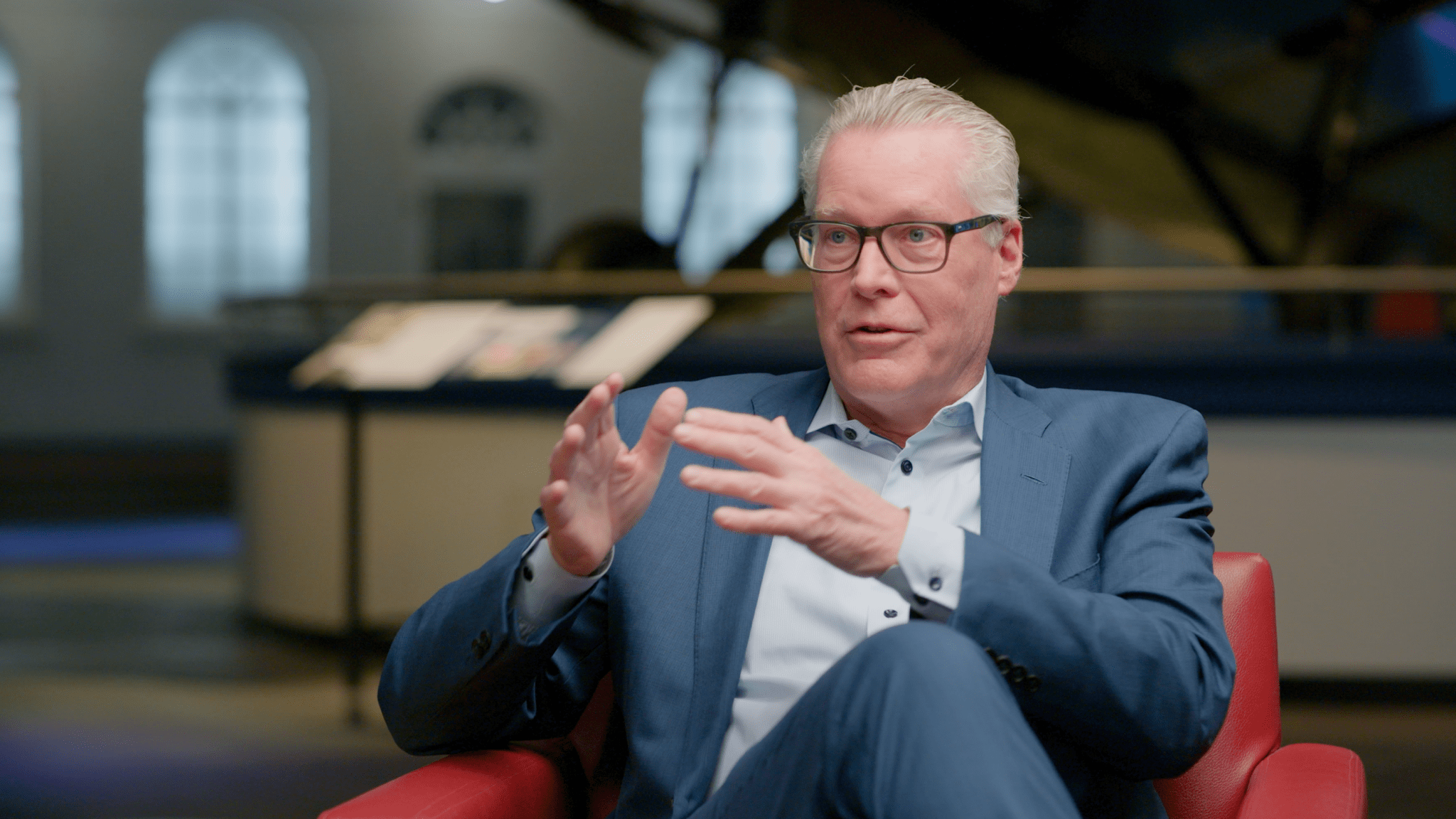
For Delta employees, Valentine’s Day lately has come with a little something extra: a bigger paycheck, thanks to Delta’s now robust profit-sharing program.
The payout is sizeable: this year, Delta dispersed over $1 billion to its roughly 100,000 employees. For Delta CEO Ed Bastian, keeping employees happy is just a key to the airline’s success.
Delta first began its profit-sharing incentive in 2007, which, Bastian notes, “at the time, people didn’t think too much about it because it wasn’t paying anything,” as the company was “far from” profitable. But that quickly changed when the CEO turned the airline from bankruptcy to the $43.6 billion company it is today, and the most profitable U.S. airline.
“They’ll get a 15% effective return on profits for as long as we’re around,” Bastian told Fortune Editor-in-Chief Alyson Shontell during the Fortune 500: Titans and Disruptors of Industry podcast of the program. “This is not like a short-term thing, because they created the 15% investment return. I thought [it] was a pretty good idea to get people excited.”
Profit sharing distributes a slice of company earnings directly to workers as a cash bonus. At Delta, the formula is simple: 10% of the first $2.5 billion in adjusted profits, and 20% of everything above that. The 15% number Bastian refers to derives as a shorthand between those two percentages.
As Delta’s success grows, the greater the reward for its staff.
This year, Delta distributed $1.3 billion to its employees, marking the ninth time in the past decade that the company distributed more than $1 billion to its workers. That’s equal to about four weeks of additional pay for the average employee. Since 2015, Delta has distributed more than $11 billion this way, and way more than the rest of the U.S. airline industry combined.
“The sharing of success is just core to the culture,” Bastian said. “Core to the competitive advantage that Delta has in the culture and the people.”
That culture definitely seems to strike a chord with the company’s employees. Nearly 9 in 10 say they envision working at Delta for a long time, which is about 4 points higher than the average for Fortune 100 Best Companies to Work For (2025). Even Bastian said as much himself: “I’m here 30 years, but I’m actually not one of the more senior people in the company. Many people have 40, 50, up to 60 years of service.” As a result, it took the 11th spot on this year’s World’s Most Admired Companies list and ranked higher than any other airline on the Top 50 list.
All that employee satisfaction leads to good results. Delta has a Net Promoter Score of 41 to 43, a customer loyalty metric ranging from -100 to +100 that measures the likelihood of customers recommending the company. Delta attributes nearly a quarter (24%) of its score to employee interactions with customers, and that score translates to 14% more revenue for seat miles, compared to Delta’s competitors.
From bust to boom
The program was born from a crisis. In 2004, Bastian, who was then the airline’s CFO, returned to Delta at half his salary after briefly quitting, on one condition: the company had to file for bankruptcy. “Sometimes your voice is actually louder when you leave than when you stay,” he said. Bastian then led the restructuring of what became one of the largest bankruptcies in U.S. history. Unfortunately, that meant asking a lot of Delta employees, from decreased salaries to the loss of their retirement safety net.
“When we went through the restructuring, we had to make a lot of hard decisions that resulted in large amounts of pay cuts, loss of jobs, loss of benefits, loss of pensions in certain cases. And when you’re at the bottom and you’re looking up, you don’t know how deep you have to go,” Bastian said. “And there was always a concern with our people saying, ‘yeah, we understand we have to make sacrifices, but how do we know what you’re going to do with the money that we’re going to give you?’”
Enter the profit-sharing program. “The great failsafe measure is when we are profitable, and we were far from it at the time,” he said. “Maybe the first year, $100 million distributed across still wasn’t a whole lot of money. But eventually, it became real dollars.”
It wasn’t until a few years into the scheme that the profit sharing crossed the billion-dollar threshold. “That’s life-changing money for a lot of people,” he said.
Shareholders jump on the bandwagon
At first, Wall Street grew restless with Delta’s decision.
“Years ago, I used to get a lot of pushback when we started getting into some big numbers from shareholders. Why are you doing this? This is our money you’re giving away,” said Bastian. But the CEO maintained the measure, adding it was a win-win all around, and that mentality eventually reached investors.
“It’s a great alignment with your shareholders because our customers win, because our employees are doing a great job for them, and the better job they do serving our customers, the better job our shareholders are going to do in terms of the returns into Delta,” Bastian said.
In fact, investors have turned around so much on the profit-sharing scheme that they’d fight to keep it.
“I would tell you if I was to announce—and I’m not—that we were going to end the profit sharing or change the profit sharing formula, the shareholders would be the first people that would come after me,” Bastian told Shontell.
The results proved him right. Delta is now America’s most profitable airline, a position it holds even after accounting for the profit-sharing payouts. “The most profitable airline that pays more profit sharing than all of the other airlines put together, and still has the highest profits as a result of that,” Bastian said.
All of this combined, Bastian said, creates a “virtuous circle” that leaves everyone—employees, customers, and stakeholders—driving up Delta’s bottom line.
It’s “taking care of the people so they can take care of the customers, who then reward our shareholders with their loyalty,” Bastian said. It’s “kind of right out in front of them.”
This story was originally featured on Fortune.com