
Welcome to rural Reeves County, which counts about 4,000 households over 2,600 square miles, in barren and arid West Texas. Soon, courtesy of Chevron, the county will possess enough gas-fired electricity to power more than 2 million homes—though in this case, all of that power will be dedicated instead to Microsoft data centers.
The massive Microsoft deal, dubbed Project Kilby, positions Chevron as the booming AI leader of Big Oil. Chevron considers Kilby—slated to come online in 2028 and ramp up through 2031—as the first of potentially several massive AI hyperscaler deals that will span West Texas and other gas-laden regions, including the Rockies and the Midwest, Jeff Gustavson, Chevron New Energies president, told Fortune. The project, fittingly, is an homage to Texas Instruments’ Jack Kilby, the inventor of the integrated circuit, or microchip, and the handheld calculator—early precursors of AI.
“After making the announcement about Kilby [in June], everyone wants to talk to us,” Gustavson said. “They now see us as a higher credibility player in this space that can actually put together everything you need on these projects, including, importantly, a customer.”
When he says “everyone,” he means not just the hyperscalers, but also the gas turbine manufacturers—critically important amid long queues for equipment—and all the other necessary third-party suppliers and contractors. Chevron brings the scale, project management, land, natural gas resources, and more.
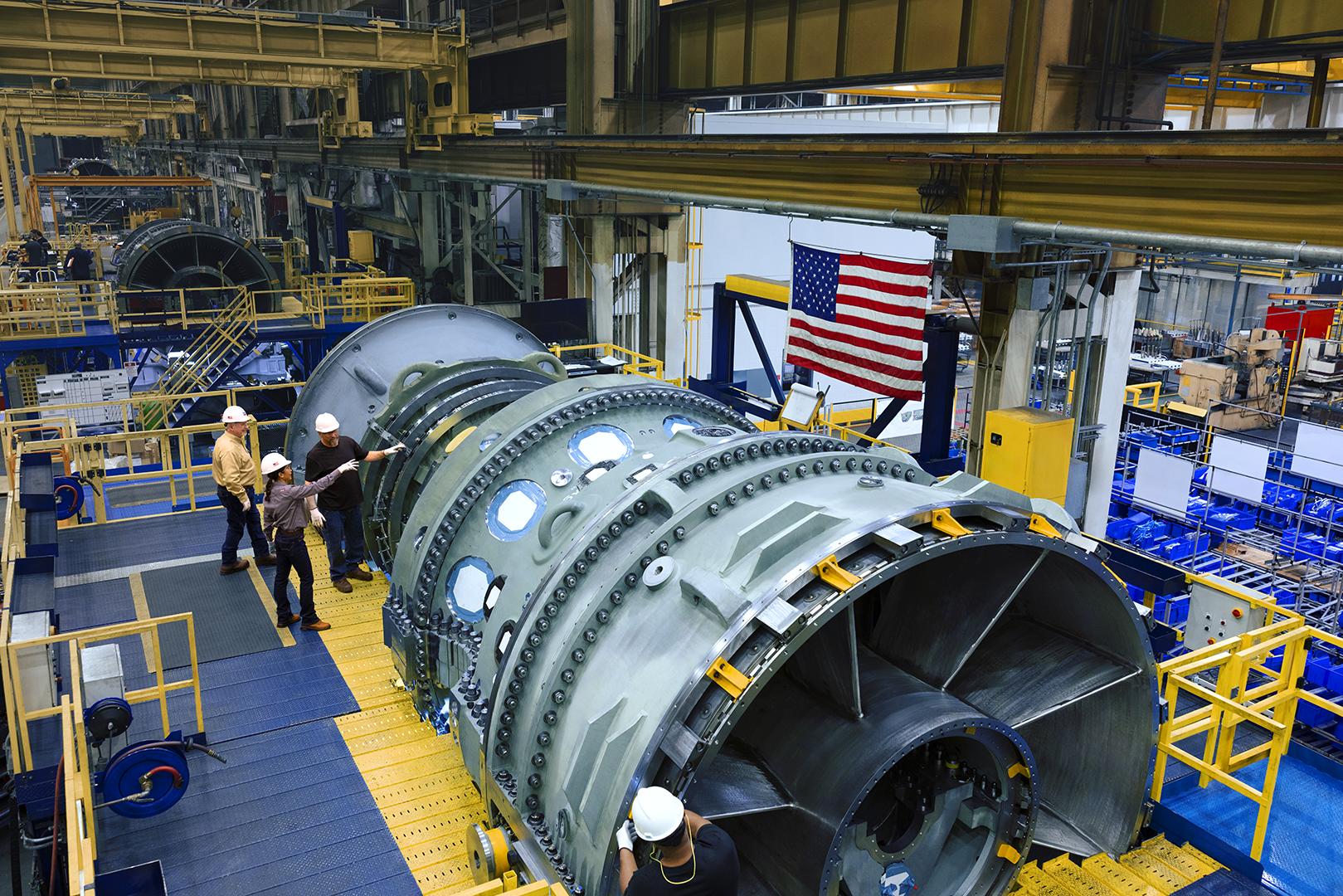
The 20-year power deal with Microsoft is for 2.67 gigawatts of natural gas-fired power—and room to grow with solar and batteries as well. The deal includes Chevron’s land and gas, additional land and water services from Texas Pacific Land, financial backing from investment firm Engine No. 1, at least seven large GE Vernova turbines, and several smaller Caterpillar Solar Titan 350 turbines. It doesn’t hurt that Chevron has a market cap of about $370 billion and just posted its most profitable quarter ever.
“We think we can do more of these. This is a platform for growth, which we think differentiates us versus our peer set,” Gustavson said. “We can be selective here because we bring a set of capabilities that really are unique. There are not many companies that can do all the things a Chevron can, and we have just proven that we can actually make this real.”

Big Oil evolution
While Chevron has worked with Microsoft on cloud computing services for a decade, when the nascent AI boom began, Chevron was in on the discussions but left out in the dark on the actual deals.
“They were very focused on renewable power only. That was all they were really talking about,” Gustavson said. “For us, renewable power is not a core strength.”
That began to shift about two years ago as speed and reliability jumped to the forefront of the global AI race. Power demand kept spiking, and the hyperscalers realized the U.S. grid wouldn’t handle the loads they required. “You started to have some of the concerns around consumer electricity prices and all of that,” Gustavson said. “And, really, the discussion shifted to, ‘Hey, we need reliable, affordable energy. Can we talk about natural gas?’”
After ExxonMobil, Chevron is the second-largest oil and gas producer in West Texas’ Permian Basin—the epicenter of U.S. energy extraction. But there’s very little power demand in the rural region. So why not build the data center complexes close to the natural gas production where there’s plenty of land readily available too?
“West Texas we always thought was the place you would want to do this first because you have a very large natural gas resource,” Gustavson said. “It’s a state where it’s a little easier to get things done. You have a deregulated power market. We know the stakeholders. You put all that together and the conversations really took off. We reserved equipment very early—a year and a half ago—and put together the project.”
Microsoft eventually agreed, having relaxed but not abandoned its climate goals to achieve AI expediency.
“The rapid growth we’re experiencing in AI and cloud, driven by customer demand, requires energy infrastructure that can scale quickly and reliably,” said Noelle Walsh, Microsoft president of the Cloud Operations + Innovation group, in a statement. “Our agreement with Chevron helps ensure we’ll have dedicated, large-scale power to support the evolution and reliability of advanced compute.”
Even with Texas Gov. Greg Abbott putting a temporary freeze on new data center grid interconnections, Chevron and Microsoft can proceed because they’re building behind the meter with ample power resources. “Texas and the administration in Austin have been very clear, ‘If you want to build data centers in this state, we need you to bring your own power. This cannot impact our consumers,’” Gustavson said.
For Chevron and Microsoft, that’s no problem. When the grid catches up, Gustavson said, Project Kilby can join the Texas grid, but there’s no urgency to do so anytime soon.
State of the AI industry
There are plenty of massive AI campuses in Texas on the drawing board. Open AI’s pioneering Stargate campus is moving slower than planned. Other larger-than-life proposals—Fermi’s Project Matador, Pacifico Energy’s GW Ranch, and Energy Abundance’s Data City, Texas campus—all lack customers for now.
Chevron counts a 20-year deal with a hyperscaler and room to grow. Only ExxonMobil can compete with Chevron for potential scale, but Exxon has focused more on developing carbon capture solutions for data center campuses instead of taking the lead on projects. For its part, Chevron is planning carbon capture growth as well.
Trek a not-so-brief, 560-mile away from dry Reeves County to Chevron’s humid Houston headquarters—yes, Texas is a large state—and Chevron chairman and CEO Mike Wirth touts how the company has turned the Permian into its free cash flow bell cow, keeping costs down and raking in the rewards.
But Wirth is willing to turn the tap back on for greater natural gas production if it means more Project Kilby equivalents. “Could the Permian grow? One hundred percent,” Wirth said during his July 31 earnings call. “The Permian is one of many options we have into the next decade for growth.”
Chevron’s other huge gas resource in the U.S. is the Rockies region—from Colorado to North Dakota—where there also is ample land. And Gustavson said the company is eyeing South Texas’ Eagle Ford Shale region closer to the U.S. Gulf Coast, and the western Midwest, Gustavson said, including Ohio, Illinois, and Indiana. All of these regions could accommodate more hyperscaler projects, he said. While West Texas remains option No. 1, he said, “We’ll be customer-led on that.”
And Chevron is cognizant of the negative environmental implications of the AI boom and the surge of new gas-fired power plants. While the natural gas industry is always quick to point out it’s cleaner than coal, Gustavson emphasized the potential for carbon capture at every gas plant, as well as adding more renewable energy and, eventually, clean geothermal power.
“This is the big question. The world is faced with this challenge. We’re always trying to balance reliability and affordability with ever-cleaner energy,” Gustavson said, arguing that AI advancements should contribute to fighting climate change over time. “For Microsoft, this is still very important to them, and it’s very important to us. We’ll continue to work together with them to see how we can best balance that equation.”
This story was originally featured on Fortune.com