
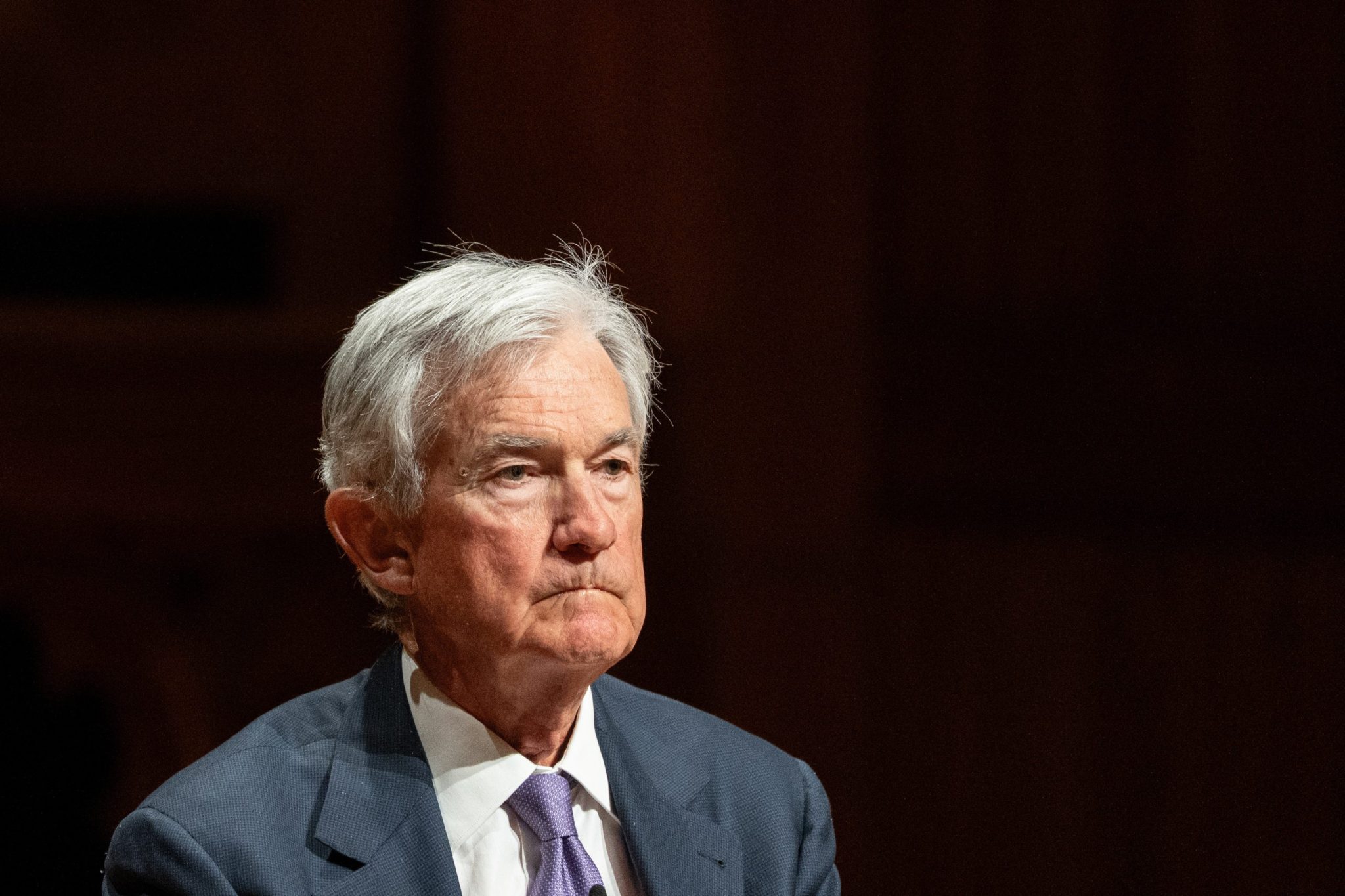
Ever since Trump announced that former Fed Governor Kevin Warsh was his nominee to lead the central bank, there was a question: Would Trump now end his feud with current chairman Jerome Powell (whom he also nominated in 2017) to clear the path for a shiny, new face behind the podium?
It seems not.
The president told Fox News in an interview published yesterday that he wouldn’t be dropping a criminal probe into Powell over renovations to the Fed building. Powell announced in January that the Department of Justice had served subpoenas on the central bank, relating to his testimony about work on the offices overlooking the National Mall.
“Don’t you think we have to find out what happened there?” the president told Fox. “I have to find out.” He added, “I’ve held back from firing him. I’ve wanted to fire him, but I hate to be controversial, you know?”
In pursuing Powell, Trump has placed an obstacle in the path of Warsh, his own nominee.
Among Republicans, Warsh is seen as something an ideal candidate: He is a staunch advocate of Fed independence (a relief to both Wall Street analysts and D.C. policymakers); he knows the central bank, having served under chairman Ben Bernanke; and he has signaled a more optimistic outlook on the U.S. economy than the current incumbent at the Fed.
Warsh’s path back to the central bank includes Senate Banking Committee hearings, penciled in for April 21. The committee is held by a slim Republican majority of 13, two ahead of their Democratic counterparts. One of those Republicans, Thom Tillis, has made it clear he will block Warsh’s progression through the process if the case against Powell isn’t dropped.
It’s nothing personal. Tillis previously said: “My position has not changed: I will oppose the confirmation of any Federal Reserve nominee, including for the position of Chairman, until the DOJ’s inquiry into Chairman Powell is fully and transparently resolved.”
Republican sources told Fortune that it was unlikely Warsh himself would be the cause of any vote against his candidacy, while Democrat sources say there is little he could do to convince critics that he isn’t a puppet for the White House.
If Tillis were to block Warsh, the committee would be split—indeed, it would only take one maverick vote among the remaining Republicans to nix his chance. It seems Trump is betting on Tillis to back down, telling Fox: “He’s on his way out … and I think he doesn’t want the legacy of stopping a great person who could be great … I know he said what he said, and maybe it’s true, in which case I’ll have to live with it.”
A hill to climb for Warsh
On the issue of Fed independence, the president hasn’t been hugely helpful. Markets and lawmakers are already sensitive to the suggestion that the influence of politicians may be seeping into the U.S. Federal Reserve: Trump has threatened to fire Powell a number of times, as well as insulting his character and policies. Meanwhile, Trump has been clear that whoever landed the nomination would have to be more dovish than Powell, and has piled praise on Warsh.
If and when Warsh does make it to the chairman’s office at the Fed (albeit not in the same building he previously served in) his job will likely be harder: He’ll have to convince colleagues who have built their careers on institutional credibility and independence that he is not the White House pawn naysayers fear.
Among a raft of reforms Warsh has previously indicated he’d like to see at the central bank, he has advanced a bullish outlook on the productivity benefits of AI, the strength of which could provide the basis for an argument to begin a rate-cutting cycle. Despite those opinions being public and stated for some time, selling them internally at the Fed may be harder due to heightened skepticism about his motives.
Yet despite the early snags, Trump’s preoccupation with the Fed building—in the event that Warsh makes it through the hearings process—may prove useful. Trump has brought his penchant for real estate development to the White House (just look at the East Wing), perhaps explaining his focus on the Fed’s bricks-and-mortar activities. If Trump’s focus on the Fed is drawn away from policy, it may give Warsh some much-needed breathing room.
While Powell and Warsh may disagree on the path of policy, they can agree on one thing: The Fed should be kept well away from politics, and even further away from the court system. “Stay out of elected politics,” was Powell’s advice to his successor.
That is precisely the plan. Warsh has continually advocated for the Fed to be scaled back to its core remit: An economist who wants to fundamentally reshape the Fed’s relationship with the bond market isn’t a man who wants the Fed tangled in the court system.
This story was originally featured on Fortune.com