
There was a simple narrative about Rishi Sunak when he was defeated in the U.K. general election of 2024. The Stanford MBA graduate and former Goldman Sachs analyst would quit Parliament, leave the U.K., and hotfoot it to California for lucrative roles toward the top of some hyperscaler or other. Sunak kept insisting it wasn’t true, despite the fact he often wore regulation Silicon Valley white trainers. Few people believed him.
Two years later, and Sunak has confounded the skeptics. He is still a Member of Parliament for a rural constituency in the north of England (AI use for dairy farmers is one of his specialties). And although he is now an advisor to Goldman Sachs, Microsoft, and Anthropic, his work is resolutely anchored in the U.K. The Labour government is regularly in touch.
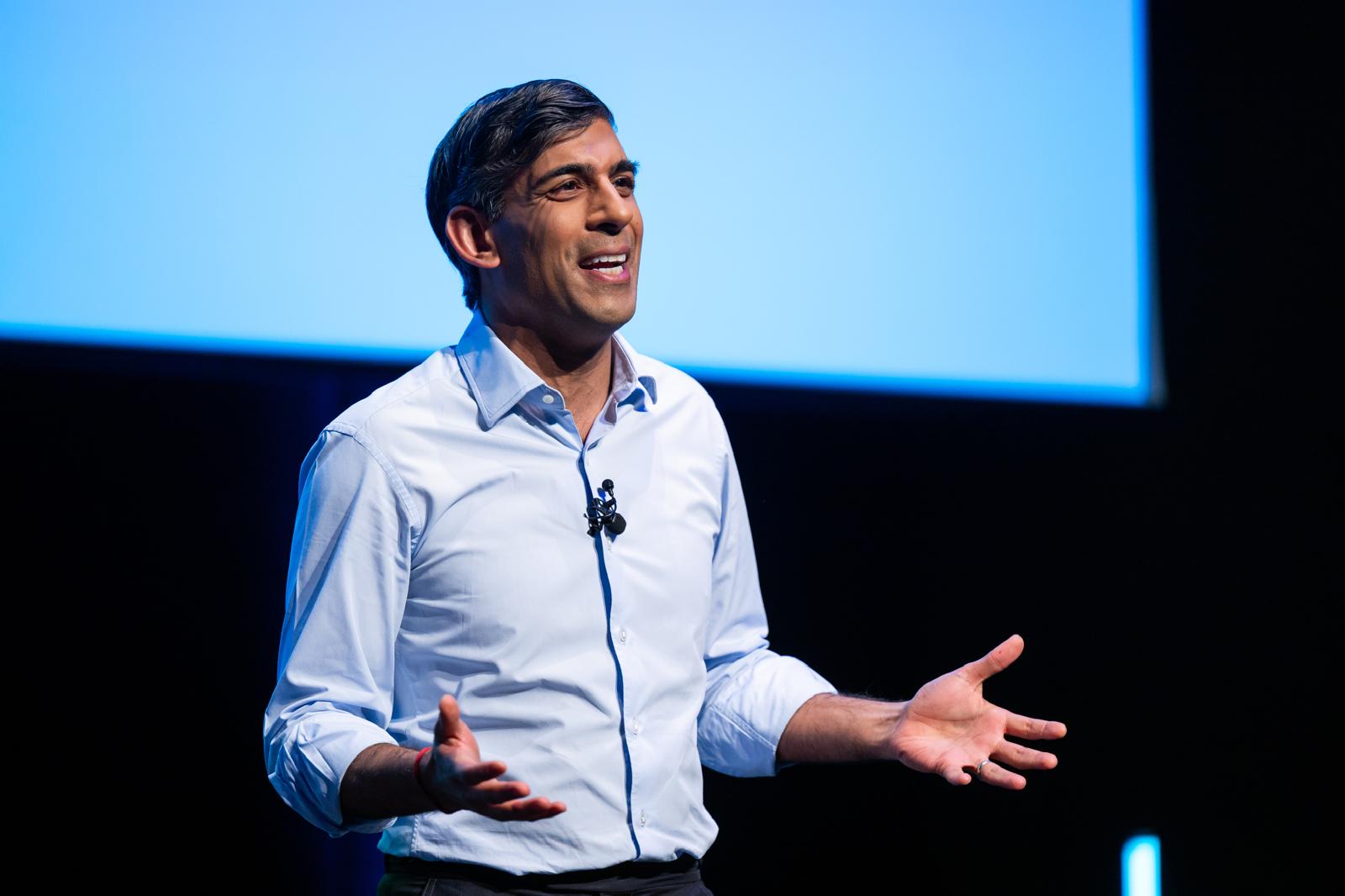
“My work with the two technology companies has left me even more convinced, not just about how much AI is going to change, but how quickly it’s going to change things, too,” Sunak told a Goldman Sachs conference for small businesses held in Birmingham, England’s second city 100 miles north of London.
“It’s not just about transforming our economy—as much as that is important. I believe that AI is going to lift the floor for humanity, and it’s going to do that because it’s going to make it possible for everyone, no matter where they are around the world, to have access to the best health care and education that money can buy. And I think that is an extraordinary democratizing force.”
He told the room full of chief executives that speed of adoption is “everything.” If you are not planning for the era of applied AI (in use in your business), then the risk is being left behind, sitting on the wrong side of a “K-shaped economy.”
“My work with the two technology companies has left me even more convinced, not just about how much AI is going to change, but how quickly it’s going to change things, too.”
Rishi Sunak, former U.K. prime minister
“Like steam power, like electricity, artificial intelligence is a general-purpose technology which can and will change every aspect of our economy, of our society,” Sunak said. “With new technologies, we’ve all been through these cycles. There’s lots of hype out there, and people get carried away, but I genuinely believe that it is a conservative estimate to say that artificial intelligence will have twice the impact of the Industrial Revolution in just half the time.”
The question-and-answer session with the business leaders is revealing. Most feel they need support in making decisions as CEOs. Others know they need to train their staff so that new ways of being productive can be cocreated, not ordered from above. Many fear losing their jobs, sometimes through ignorance rather than data. One founder flagged “false confidence” with splashy AI tools as worthy of note.
“It’s clear that when it comes to AI, the responsibility for it can’t sit in the IT department,” Sunak said. “It has to start with the leaders. Research from McKinsey shows that when leaders demonstrate ownership and commitment, they find that AI deployment in their organizations is far more successful. That doesn’t mean that you have to have deep technical expertise. You don’t need to become a coder overnight, but it’s about awareness, [and] it’s about mindset.
“When I go around the country talking to businesses, the single biggest mistake I see is that people start with the technology first and then try and find a use case for it, which is completely the wrong way around.
“The best thing to do is to look at your business first and figure out where the pain points are. Where are those tasks that employees are really frustrated with? Where are the processes that slow things down? Or where are the bottlenecks that are limiting your growth? That is probably the best way to identify a set of initial AI use cases.”
One of the sessions at the Goldman Sachs conference is titled “AI—friend or foe?” It’s neither, of course. The key will be a CEO’s awareness of where AI can drive growth and revenue opportunities whilst retaining the very essential human leadership and guidance that makes each business and division unique. If everyone uses the same AI tools in the same way, then everyone risks offering the same AI-led solutions. And a world of AI-slop is not where anyone wants to be.

This story was originally featured on Fortune.com