
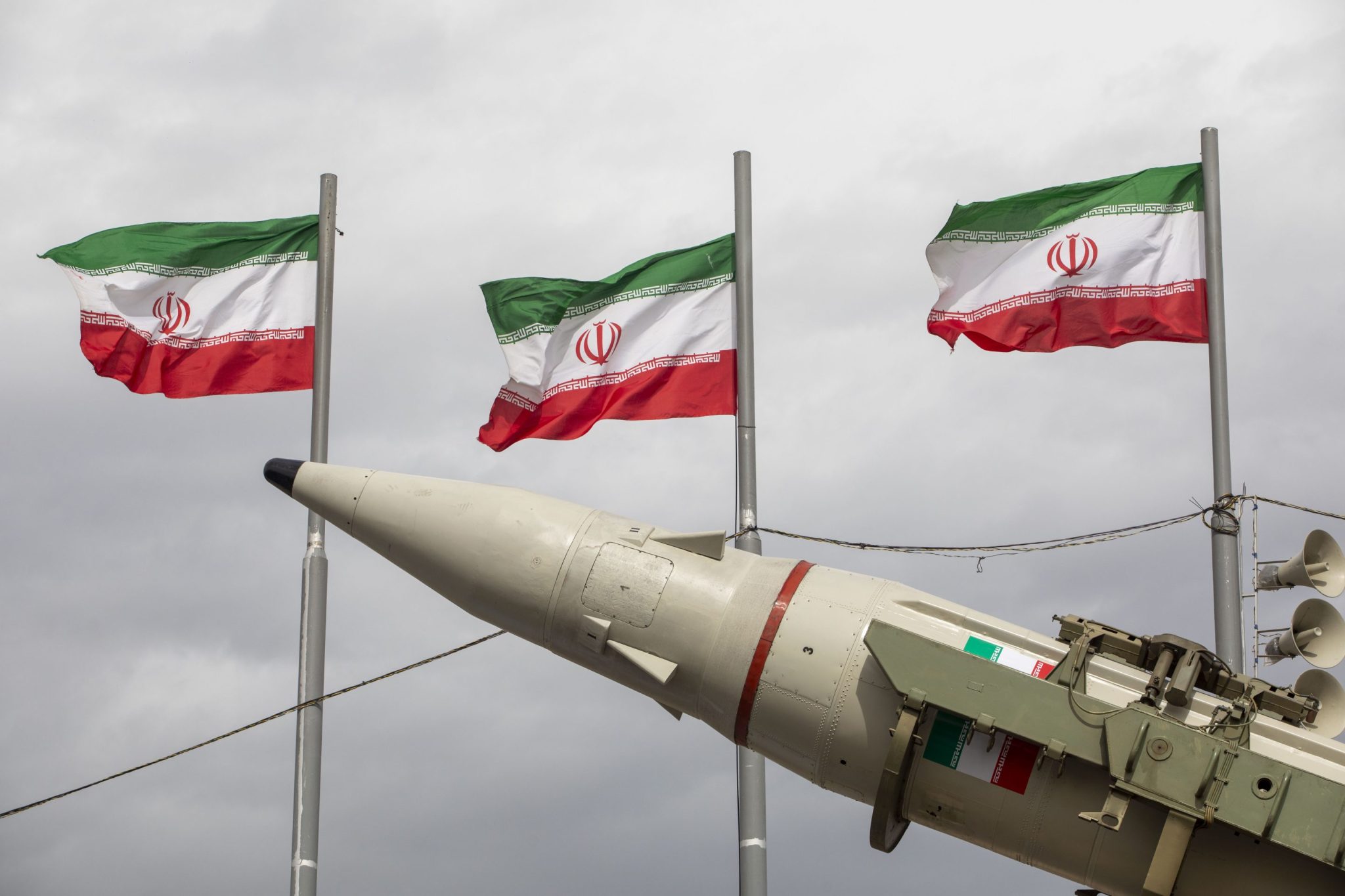
The United States and Iran will hold their next round of nuclear talks Thursday in Geneva, a facilitator said Sunday, as the Islamic Republic faces both the threat of a U.S. military strike and new protests at home.
Oman’s foreign minister, Badr al-Busaidi, confirmed the talks. Oman previously hosted the indirect talks on the Islamic Republic’s nuclear program and facilitated the latest round in Geneva last week.
There was no immediate comment from the Trump administration, which has built up the largest U.S. military presence in the Middle East in decades as it pushes its longtime adversary for concessions on its nuclear program and more.
Shortly before Oman’s announcement, Iran’s top diplomat, Abbas Araghchi, told CBS in an interview that he expected to meet U.S. envoy Steve Witkoff in Geneva on Thursday, and said a “good chance” remained for a diplomatic solution on the nuclear issue.
Washington awaits a proposed deal that Araghchi has said would be ready to share within days, and the foreign minster told CBS that Iran was still working on the draft proposal.
The nuclear issue, he added, is the only matter being discussed — even though both the United States and Israel also want to address Iran’s missile program and its support for armed proxies in the Middle East.
President Donald Trump warned on Friday that limited strikes against Iran are possible, and both Iran and the U.S. have signaled they are prepared for war if the talks on Tehran’s nuclear program fail.
Minutes after Oman’s confirmation of the talks, Iranian President Masoud Pezeshkian said on social media that negotiations had involved “the exchange of practical proposals and yielded encouraging signals,” but added that Tehran has “made all necessary preparations for any potential scenario.”
The U.S. has said Iran cannot have nuclear weapons or the capacity to build them and that it cannot enrich uranium. Araghchi, however, told CBS that Iran has the right to enrich uranium.
On Friday, he said his U.S. counterparts had not asked for zero enrichment as part of the latest round of talks, which is not what U.S. officials have said publicly. He also said talks focused on how to ensure that Iran’s nuclear program, including enrichment, “will remain peaceful forever.” He said that in return, Iran will implement confidence-building measures in exchange for relief on economic sanctions.
Tehran has long insisted that any negotiations should only focus on its nuclear program, and has refused to discuss wider U.S. and Israeli demands that it scale back its missile program and sever ties to armed groups.
Although Iran insists its nuclear program is peaceful, the U.S. and others suspect it is aimed at eventually developing weapons. Iran says it hasn’t been enriching uranium since U.S. and Israeli strikes on Iranian nuclear sites in June.
At that time, Trump said the strikes had “obliterated” Iran’s nuclear sites, but the exact damage is unknown because Tehran has barred international inspectors.
Meanwhile, Araghchi asserted to CBS that “we have a very good capability of missiles, and now we are even in a better situation” than before the strikes in June.
Nuclear talks had been deadlocked for years after Trump’s decision in 2018 to unilaterally withdraw the U.S. from Iran’s 2015 nuclear dealwith world powers.
New protests in Iran
Confirmation of new talks came as new anti-government protests began in Iran, according to witnesses, as university students in Tehran and another city demonstrated around memorials for thousands of people killed in a crackdown on previous nationwide demonstrationsabout six weeks ago.
Iran’s state news agency said students protested at five universities in the capital, Tehran, and one in the city of Mashhad on Sunday. The scattered protests erupted Saturday at universities following 40-day memorials for people killed in January during anti-government rallies.
Videos posted on social media appeared to show confrontations at two universities between government supporters and anti-government protesters, with some chanting “Death to dictator.”
Iran’s government has not commented on the latest protests.
Many Iranians have held ceremonies marking the traditional 40-day mourning period in the past week. Most of the protesters are believed to have been killed around Jan. 8 and 9, according to activists tracking the situation.
Iranians across the country are still reeling with shock, grief and fear after the earlier protests were crushed by the deadliest crackdown ever seen under the rule of 86-year-old Supreme Leader Ali Khamenei. Thousands of people were killed and tens of thousands are believed to have been arrested.
Although the crackdown tamped down the largest protests, smaller ones are still occurring, according to protesters and videos shared on social media.
During the 1979 Islamic Revolution that toppled the shah and brought the Islamic Republic to power, 40-day memorials for slain protesters often turned into rallies that security forces tried to crush, causing new deaths. Those were then marked 40 days later, with new protests.
Posts on social media Saturday and Sunday have alleged that security forces tried to restrict people from attending some 40-day ceremonies.
The U.S.-based Human Rights Activists News Agency says at least 7,015 people were killed in the previous protests and crackdown, including 214 government forces. The group has been accurate in counting deaths during previous rounds of unrest in Iran and relies on a network of activists there to verify deaths.
The death toll continues to rise as the group crosschecks information despite disrupted communication with those inside the Islamic Republic.
Iran’s government offered its only death toll from the previous protests on Jan. 21, saying 3,117 people were killed. Iran’s theocracy in the past has undercounted or not reported fatalities from past unrest.
The Associated Press has been unable to independently assess the death toll, given authorities have disrupted internet access and international calls in Iran.
This story was originally featured on Fortune.com