
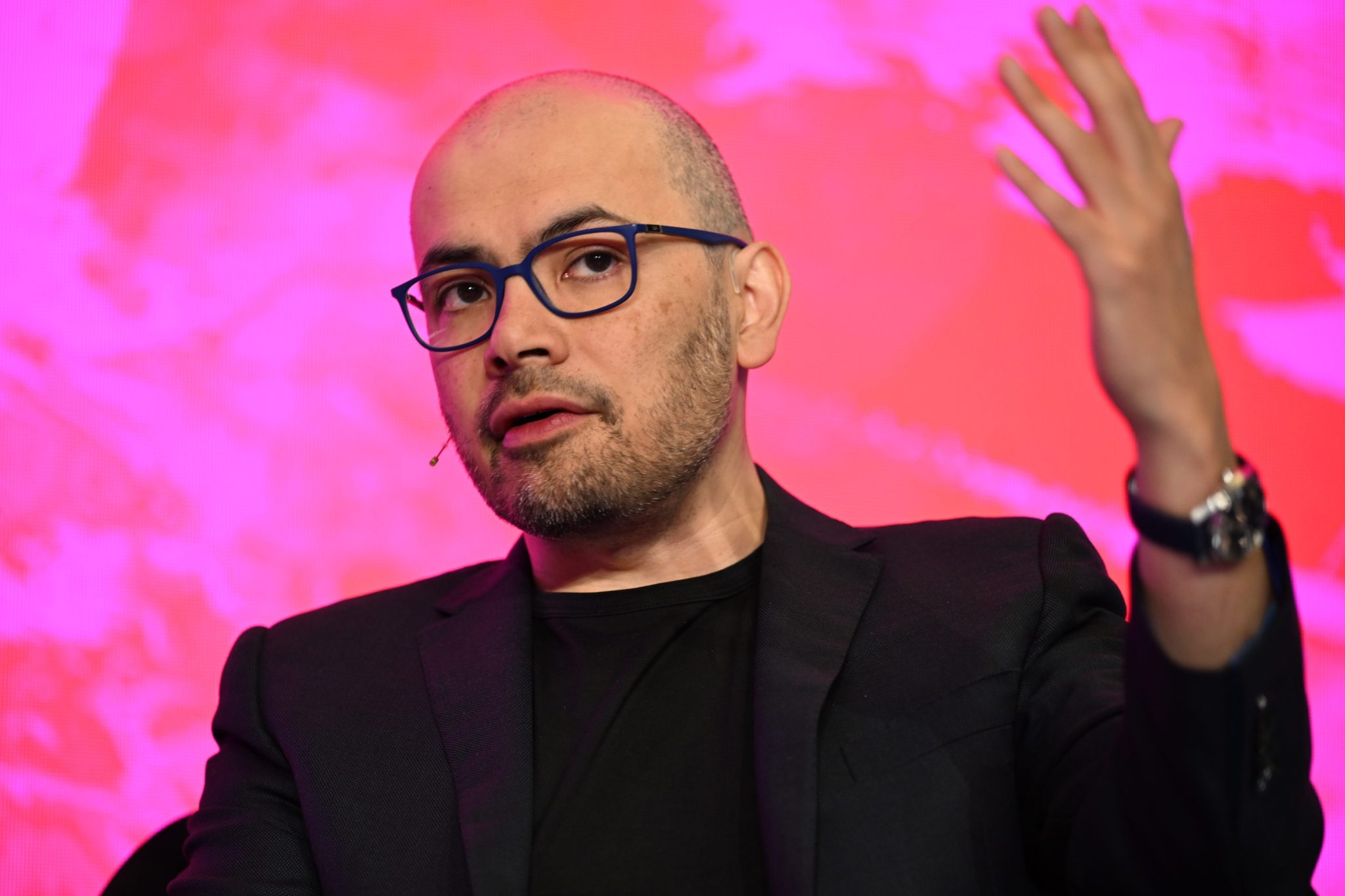
While many CEOs set their alarm clocks for a 5 a.m. wake-up time, Google DeepMind CEO Demis Hassabis has just hit the pillow after his second work shift of the day.
“I don’t sleep very much,” Hassabis recently said on Fortune’s Titans and Disruptors of Industry podcast with editor-in-chief Alyson Shontell. “I do try and get six [hours], but I have unusual sleeping habits I sort of manage during the day. [I] try and pack my day in the office with as many meetings as possible, back-to-back, almost no time, no break between.”
The AI pioneer has been on a winning streak since 2014, when he sold his AI company, DeepMind, to tech behemoth Google. The acquisition itself stoked fear among his competitors; Meta CEO Mark Zuckerberg’s higher offer was declined, and outraged by the deal, fellow tech mogul Elon Musk launched OpenAI with Sam Altman as a countermeasure.
A decade later, Hassabis oversees all of Google’s AI ventures, including its popular tool Gemini. And in what little spare time he has, Hassabis also won the Nobel Prize for Chemistry in 2024, while leading a startup aiming to solve disease with AI: Isomorphic Labs.
Yet after a long day of work running DeepMind, the CEO still isn’t ready to catch some well-deserved shut-eye. Once his daytime shift is over, he takes a short break before delving right back into his job—with no meetings or distractions to interrupt his flow.
“I get home, spend a little bit of time with family, have dinner, and then I sort of start a second day of work about 10 p.m. and go to 4 a.m., where I do my thinking and more creative work and research work. And it’s worked out,” Hassabis continued. “I come alive at about 1 a.m.”
From Reddit to Airbnb: These executives love to work late into the night
Hassabis isn’t the only one leading a successful business on his own timeline.
Airbnb cofounder and CEO Brian Chesky also isn’t one to “rise and grind” like other entrepreneurs. Chesky gets his energy at night, after his workout routine that wraps up around 9:30 p.m.
He hits peak productivity at 10 p.m., lasting until he falls asleep around 2:30 a.m. And since he’s the boss of his $73 billion short-term rental business, he gets to set the rules; his late bedtime means no meetings at the crack of dawn the next day, as 10 a.m. is the earliest Chesky will go.
“If I had a girlfriend, that would probably change,” Chesky told the Wall Street Journal last year. “But I don’t, so I’ll enjoy this.”
Other founders including Reddit’s Alexis Ohanian fall more into the night owl camp than the early-riser pack. He goes to sleep at around 2 a.m. everyday—hours later than the many CEOs who have already snoozed off.
“I try not to have the computer in the bedroom,” Ohanian told Fast Company in a 2013 interview. “I used to sleep with it, though. I used to wake up spooning my laptop.”
And the global chief brand officer of French sports label Salomon, Scott Mellin, isn’t too keen on arriving at his job at the crack of dawn either. He reserves those early morning hours to ski or ride his bike, thinking “deeply about the business” before clocking in. The executive prefers to go into the office when others are peeling off for lunch—and sticks around later before attending other work-related obligations.
“I spend my morning skiing or riding my bike, which gives me time to think deeply about the business before heading to the office at noon,” Mellin told Fortune last year. “I work later into the evening or head out for dinner with clients or partners. It might be different, but it is a routine I’ve stuck to for over 25 years.”
This story was originally featured on Fortune.com